Technology
Business Card Design Trends in Japan, South Korea, and Singapore
Design for each market by treating Japan, South Korea, and Singapore as distinct audiences. This article gives concrete visual, typographic, and production decisions you can test before printing a full run.
International Business Card Etiquette: Cultural Differences Every Global Professional Should Know
Practical decision rules that help you choose between paper cards and digital exchanges, how to present and receive cards in common situations, and specific follow-up templates to use within 48 hours or one week depending on formality.
How to Manage Business Cards from Multiple Asian Markets in One Digital System
Capture the original script, add a practical romanized name, tag by market, and normalize phone numbers. A disciplined workflow plus the right system turns scattered business cards into usable international contacts.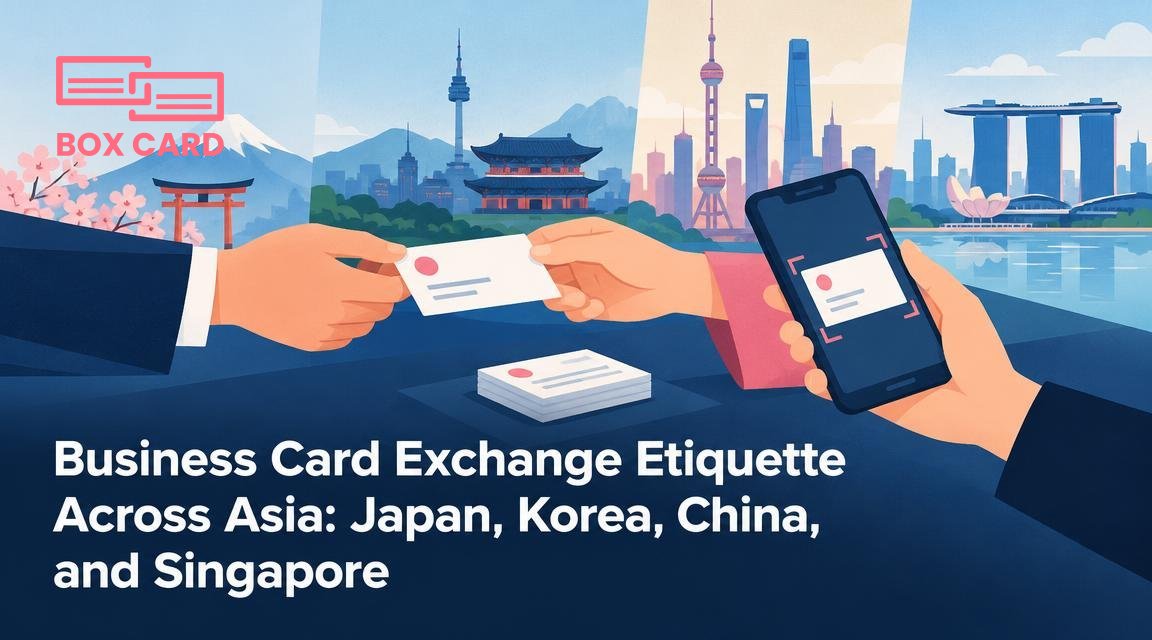
Business Card Exchange Etiquette Across Asia: Japan, Korea, China, and Singapore
If you will meet people from Japan, Korea, China, and Singapore on one trip, use a short set of decisions: which card to carry, whether to present formally, and how you will digitize contacts. This article offers concrete rules, phrases, and a brief workflow to avoid common mistakes and follow up correctly.
Business Card Culture in Hong Kong: How to Make a Professional First Impression
Want to make a professional first impression in Hong Kong? Use a clear bilingual business card, present it politely, scan and follow up within 48 hours. This article gives concrete card design, exchange, and follow-up rules that work across sectors.
Business Card Etiquette in Singapore: Networking Tips for International Professionals
Practical, culture-aware rules for exchanging business cards in Singapore, plus a clear workflow: how to offer and receive cards, when to digitize them, and which app features to choose for reliable follow-up.
Chinese Business Card Culture Explained: Names, Titles, and Professional Introductions
Learn the correct way to receive and read Chinese business cards, how titles and name order matter, and a practical workflow to digitize cards accurately for follow-up.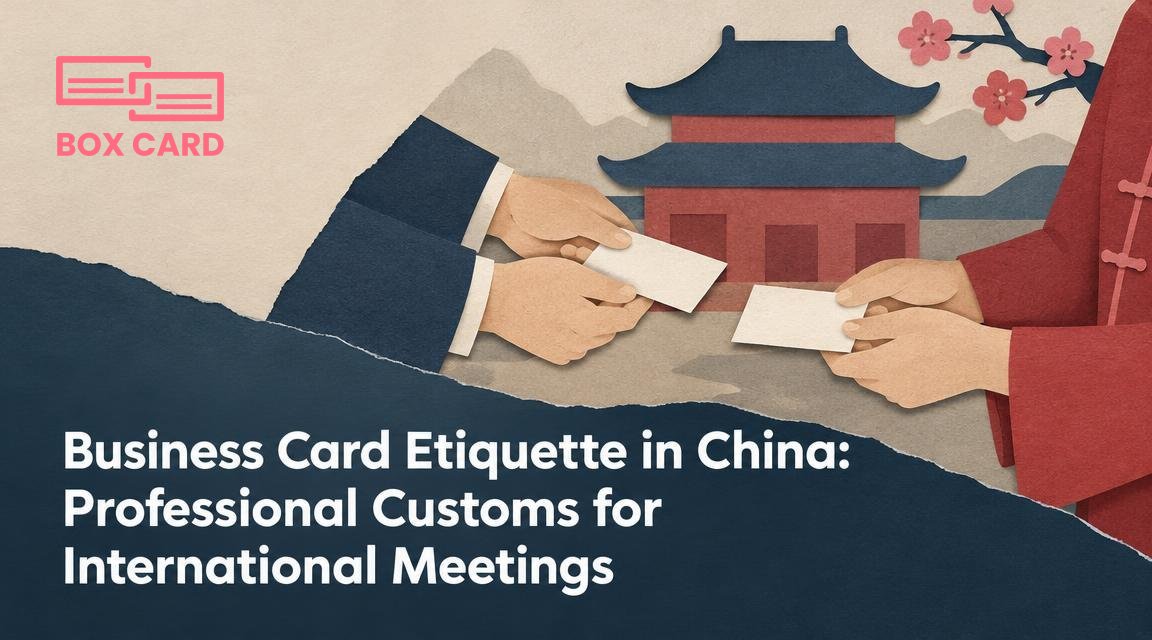
Business Card Etiquette in China: Professional Customs for International Meetings
Practical, culturally correct steps for exchanging business cards in China: how to present and receive cards, what to avoid, and how to digitize contacts afterward using scanning apps and CRM integration for reliable follow-up.
How to Organize Business Cards After a Business Trip to Japan or South Korea
Get a clear, repeatable workflow for the cards you collected in Japan and South Korea: scan both sides, preserve original script, tag by event and next action, and decide whether to push contacts to CRM. Scan within 24 hours, correct within 48 hours, and follow up within 72 hours.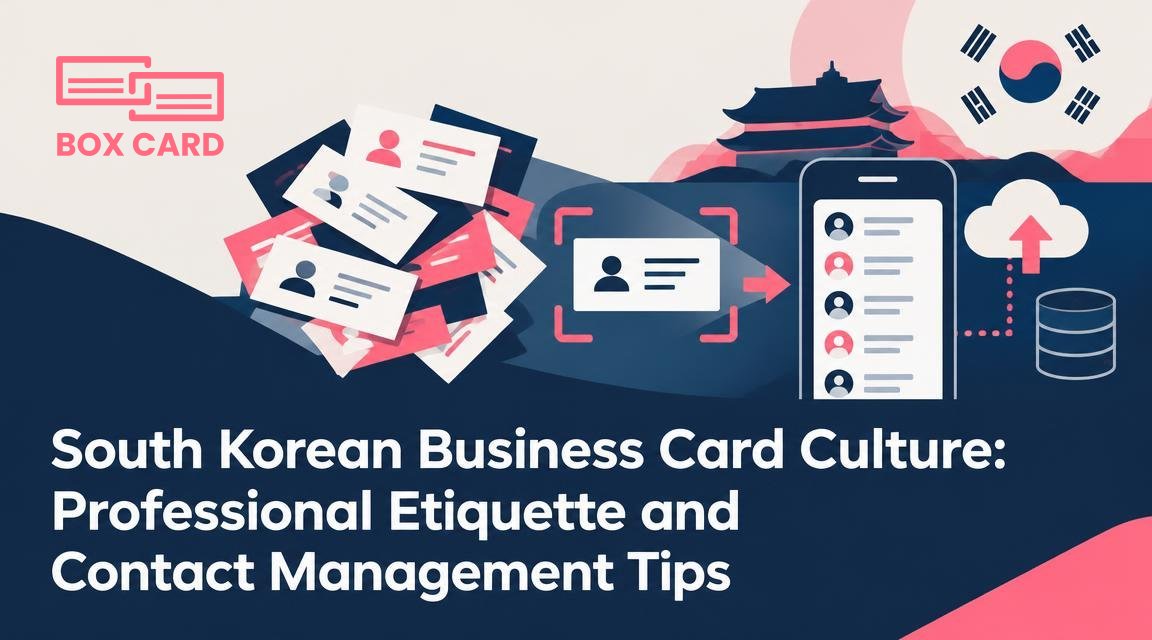
South Korean Business Card Culture: Professional Etiquette and Contact Management Tips
Handle a Korean business card as both a sign of respect and a data source: exchange politely, scan within 48 hours, correct names and titles, tag contacts, and follow up promptly to turn introductions into working relationships.