India International Trade Fair: A Gateway to Import, Export and Global Business Opportunities
Bring a capture routine to the India International Trade Fair: scan cards on the spot, add one line of qualifying context, then digitize and sync to your CRM within 48 hours to turn paper introductions into deals.
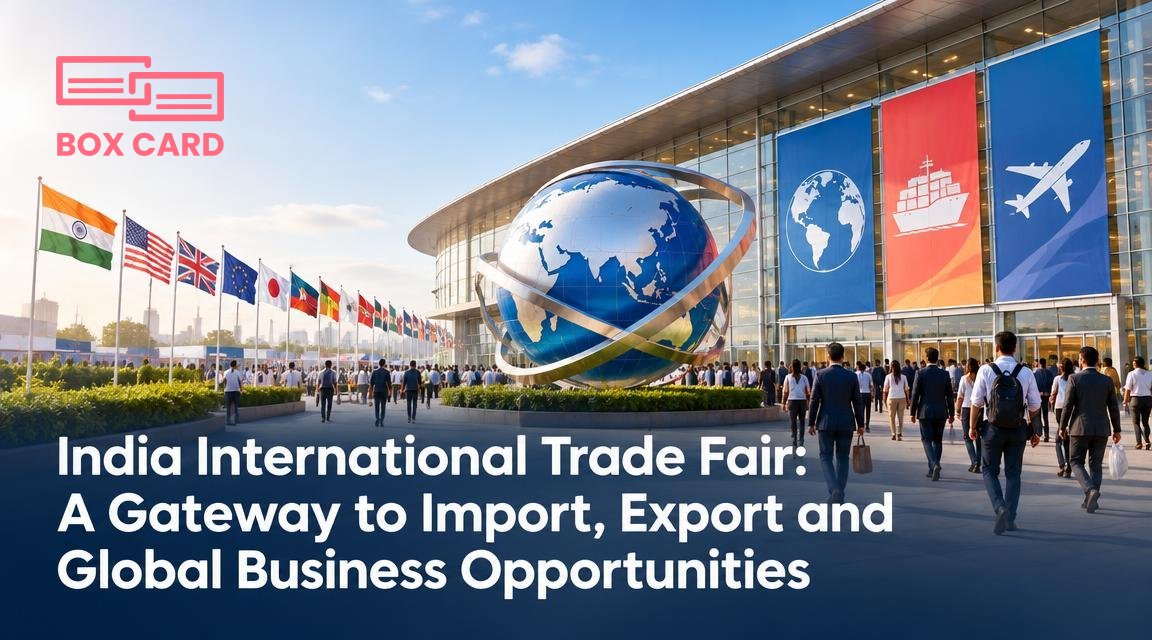
You walk out of the India International Trade Fair with a stack of 40 to 200 business cards and a single urgent question: which of these contacts are worth your time, and how do you turn those introductions into deals? This article shows how to prepare for the fair, collect usable leads on the spot, and convert paper cards into a tidy pipeline you can actually act on.
Who should treat the fair as a priority
The India International Trade Fair attracts manufacturers, distributors, importers, exporters, service providers, and government trade bodies. Attend if you are any of the following:
- A sales or business development professional looking for new accounts in India or overseas.
- An exporter or importer building supplier networks or sourcing partners.
- An entrepreneur testing product-market fit and wanting quick market feedback.
- A procurement manager, trade policy advisor, or industry association representative who needs rapid introductions.
If your objective is networking and deal generation rather than mere visibility, arrive with a plan for lead capture and follow-up.
Prepare before the fair: goals, kit, and content
Set clear, measurable goals
- Decide what counts as a qualified lead: a budget threshold, decision-making authority, or a specific procurement timeline.
- Set a numeric target for meaningful conversations, not just card exchanges. For example: five qualified buyers, ten distributor conversations, or three product demos booked.
Physical and digital kit
- Business cards: bring more than you expect to give away and design the card to invite a next step (QR code, short CTA).
- Sales collateral: single-sheet specs, pricing tiers, and one-page case studies you can hand out quickly.
- Tablet or phone: show a short pitch video or portfolio. Make sure the device is charged and offline copies are available.
- Lead capture tools: an expo-friendly form, a simple demo booking link, and at least one business card scanning option on your device.
How to collect leads that convert
Make each card exchange count
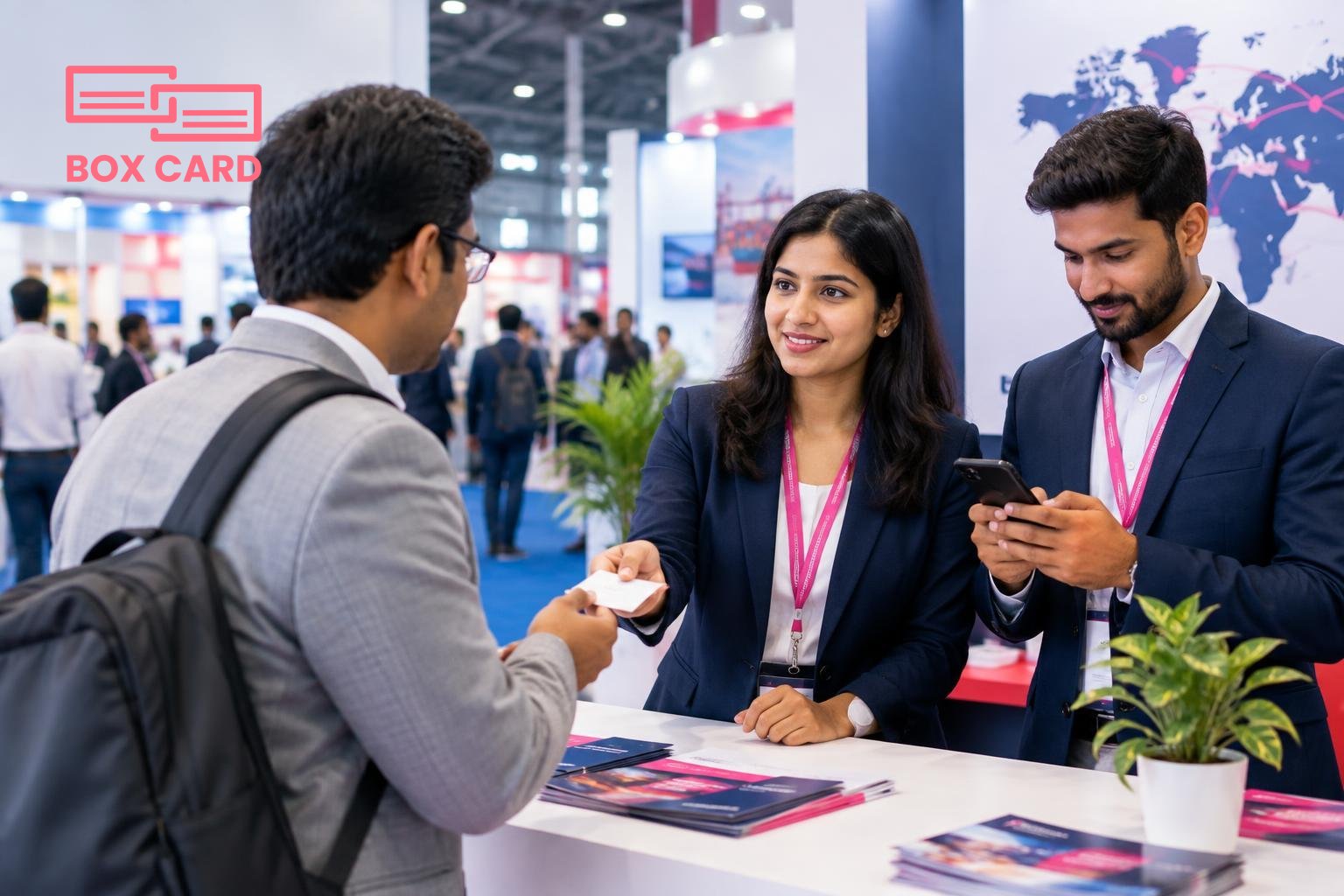
A business card is only useful if it includes context. Ask one quick qualifying question while you take the card, such as their time frame for purchase, whether they are a decision-maker, or which markets they serve. Record a 10 to 20 second voice note or a single line in your device: "importer, Mumbai, evaluating distributors Q3." That context cuts down wasted follow-up.
Use technology at the stand
Scan cards on the spot rather than piling paper into a box. Fast scanning reduces transcription errors and keeps data actionable. Choose a business card scanning app that preserves the original image and allows immediate tagging. If you prefer Boxcard, use it for quick capture and to keep your collected contacts organised for later action.
Turn captured cards into opportunities: the post-fair workflow
Trade fairs are won in the two weeks after the event. A repeatable workflow makes the difference between a drawer of cards and a real sales pipeline.
Step 1: Digitize and qualify within 48 hours
- Scan each card and add the minimal context you recorded during the conversation. This is the most time-sensitive step.
- If you use a business card OCR app, correct any recognition errors as you go to keep data clean.
- Tag contacts by priority, region, and next action: demo, quote, introduce to partner, or nurture.
Step 2: Sync with CRM and hand off
A CRM business card management routine matters once multiple team members work the leads. Export or sync scanned contacts into your CRM, assign owners, and schedule follow-up tasks. When evaluating tools, pay attention to CRM integration so you do not recreate work by copying and pasting.
Step 3: Follow up with value
Send a brief recap message that references your fair conversation, attach the one-pager you promised, and propose one concrete next step: a short call, a product sample, or a quote. Use email templates but personalise the opening line to the qualifying detail you recorded.
Which tools to choose for business card handling
There are three common approaches. Which one suits you depends on volume, team size, and whether you need CRM integration.
- Manual entry: Low volume, high control. Good for solo entrepreneurs with fewer than 50 cards, but slow and error-prone.
- Dedicated scanning apps: Fast capture, searchable data, and tagging. If you expect hundreds of cards, prefer a Business card management app or business card digitization app that keeps images and text together. Examples include generic industry apps and, for teams, Boxcard scanning app or Boxcard business card management for cleaner handoff.
- Enterprise data systems: For companies that handle thousands of contacts, a Business card data management system combined with CRM business card management and automated routing is worth the setup effort.
If you want a low-friction route at the fair, use a business card scanning app on your phone to capture and tag contacts immediately. Later, export or sync those contacts into the CRM. Look for High-accuracy business card scanning app performance and support for the languages and scripts you expect to collect.
Privacy, permission, and compliance
When you digitize cards, respect privacy expectations. If a contact asks you not to be added to a marketing list, note that in their record and avoid mass emails. Keep any sensitive commercial information off public profiles and follow local data protection rules when sharing contact lists with partners.
Do not treat every collected card as a marketing lead. Prioritise based on qualification, and document permission for any further contact.
Common mistakes to avoid
- Waiting weeks to digitize cards: the memory fades and the context is lost.
- Not tagging or qualifying contacts: follow-up becomes scattershot.
- Sending generic follow-up messages: low response rates and wasted opportunities.
- Keeping paper piles without a process for conversion: the pile becomes evidence of missed revenue.
Practical checklist for the fair
- Predefine three outcomes you want from each conversation.
- Bring a scanning routine: a reliable phone, a charged power bank, and a preferred app such as a business card OCR app or Boxcard.
- Prepare a one-line pitch and a single follow-up offer you can confirm immediately.
- Plan 48-hour digitization and CRM sync, using CRM integration where possible.
Using a business card information sharing app or Cloud business card management keeps the team aligned. If you need a low-cost option, evaluate Free business card management tools for immediate capture, but confirm they support export to your CRM before the fair.
The India International Trade Fair is a concentrated opportunity: the contacts are valuable because they are present and ready to talk. Turning that concentration into commercial progress requires a short list of simple decisions: how you capture data at the stand, how fast you digitize and qualify, and how reliably you hand leads to your sales engine. Start by choosing a capture method that your team will actually use, whether that is manual plus CRM, a High-accuracy business card scanning app, an AI business card scanner for mixed-language cards, or an organised BoxCard cloud workflow for shared access.
Plan your objectives now, pick a capture routine you will follow in the chaos of the fair, and schedule the two days after the event for digitization and routing. Those choices decide whether the stack of cards becomes a stack of meetings or a forgotten drawer.
