Aero India: How Aviation Events Create International Business Connections
Aero India generates dozens of international contacts every day. The difference between a stack of business cards and a real partnership is fast, contextual capture and prompt follow-up. This article gives a practical workflow and tool guidance to convert event contacts into business outcomes.

At Aero India, deals do not close on the stand. They begin with conversations, a handshake, and almost always, an exchange of business cards. For exhibitors, suppliers, delegations, and visitors the challenge is simple: how to turn dozens or hundreds of paper contacts into real international business opportunities without losing details, context, or time.
This article explains how aviation events create international business connections, and gives practical steps to capture, qualify, and convert leads efficiently. It also covers the role of digital tools such as Boxcard and other business card apps that help you manage contacts after the show.
Why aviation events are fertile ground for international deals
Aero India brings together manufacturers, suppliers, regulators, military delegations, and maintenance organisations from many countries. That mix creates opportunity because:
- Supply chains meet demand directly: OEMs and tier suppliers can meet each other face to face rather than through months of email.
- Decisions are concentrated: procurement managers, technical leads, and business development people gather in one place, shortening sales cycles.
- Cross-border partnerships become practical: an MRO provider might find a local partner to meet regulatory or logistical requirements for a new market.
What separates a useful contact from a missed opportunity
At any trade show the difference between a lead and a dead card is context and action. Two easy failures are common:
- Collecting cards without notes. A card without context is hard to prioritise later, especially when names look unfamiliar across language systems.
- Delaying follow-up. Time zones and busy inboxes mean that follow-up within 48 hours raises the chance of a reply; waiting weeks often kills momentum.
Capture: how to document contacts so they become business-ready
Capture means more than saving a name and number. At events like Aero India, use a short checklist you can complete in under a minute after each meaningful conversation:
- Photograph the business card and the person. Visual memory helps when you review later.
- Write one line of context: why you spoke, what problem they care about, and any next step (for example: "MRO looking for component sources, wants supplier shortlist by March").
- Tag the contact by category: procurement, OEM, MRO, regulator, investor, technology partner. Tags make sorting faster than scanning long notes.
- Add the priority level: hot, warm, or low. Prioritise hot contacts for immediate follow-up.
Tools that make capture fast and reliable
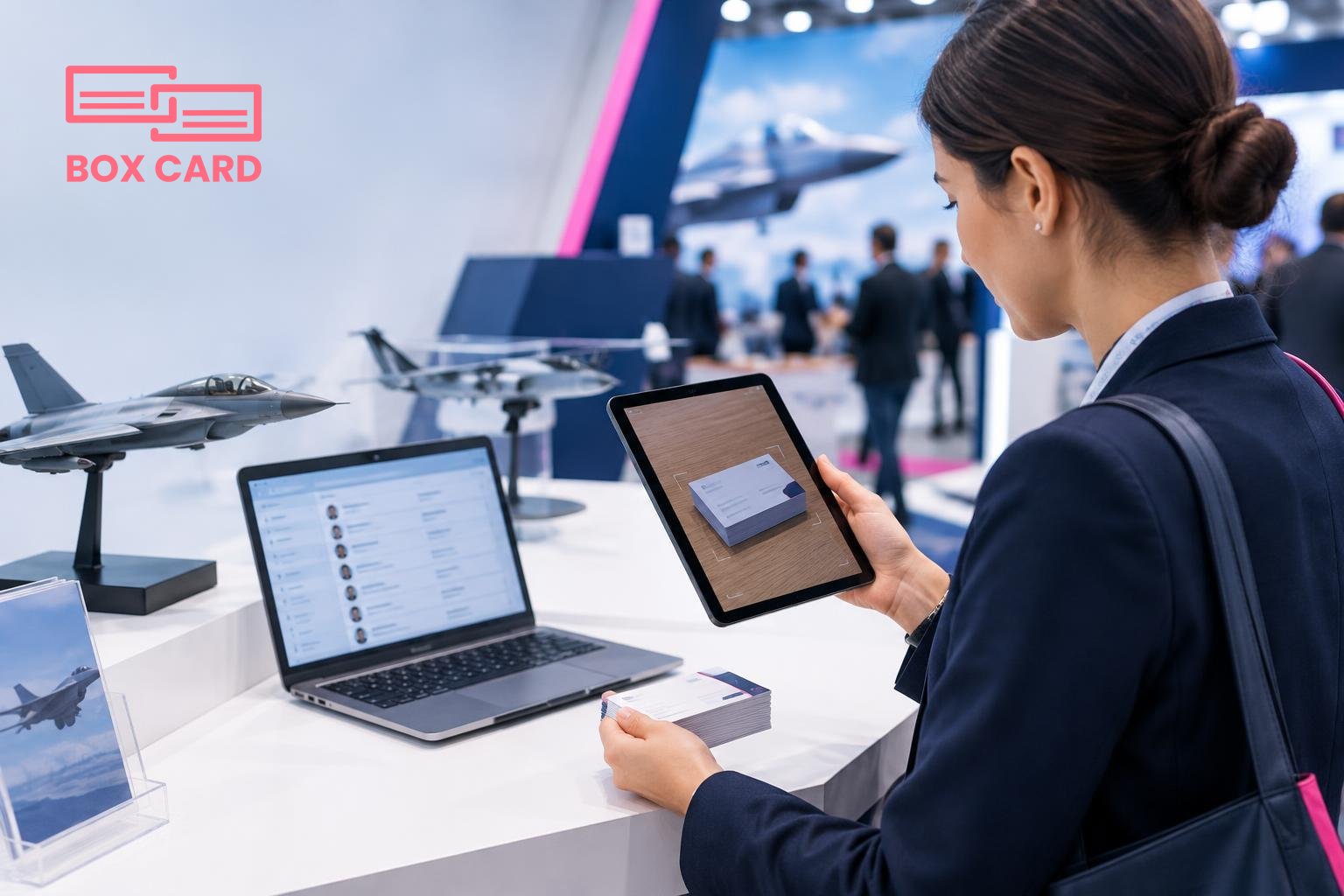
Paper stacks slow you down. A business card scanning app speeds capture and reduces transcription errors. If you want to digitize cards at the show, consider apps that offer:
- Fast, on-device capture so you do not need an internet connection at the stand.
- Business card OCR app accuracy for names and phone numbers, especially with non-Latin scripts.
- Cloud business card management or BoxCard cloud options so teams can access shared contacts after the event.
Examples of tasks you can perform at the show include quick scans, batch imports later, and sharing a curated contact list with your sales team using a business card information sharing app. If you want a simple how-to, search for "How to digitize business cards" for step-by-step checklists you can apply on the first day of the event.
Qualify: turn a scanned card into a working lead
Once cards are digitized, qualify them quickly using three criteria: budget, timeline, and authority. Ask yourself within 48 hours whether the contact:
- Has a realistic budget for the product or service you discussed.
- Has a clear timeline for procurement or a project start date.
- Is a decision maker or directly connected to one.
For teams that must share contacts, a Business card management app with simple tagging and comment features reduces duplication. That same app becomes the source for sales activity if you export or connect it to your CRM. CRM integration or CRM business card management are useful next steps when you have a high volume of leads that need pipeline tracking.
Follow-up: messages, timing, and content that work across borders
International business follows different rhythms. Use these rules:
- Send an initial message within 48 hours. Keep it short, reference the meeting, and propose a specific next step such as a brief technical call or an in-person factory visit.
- Localise the message. Show an awareness of local protocol and business culture, and use a relevant language if possible or provide a version in English and the recipient's language.
- Include a single useful attachment: a one-page capability statement or a short product spec. Do not overload the first email with large documents.
If you scanned the cards with an AI business card scanner or a High-accuracy business card scanning app, the contact details will already be searchable and you can personalise messages quickly using templates. For teams that support field sales, Sales support business card management helps align follow-up with local reps or regional managers.
From contacts to contracts: organising the post-show pipeline
After the event, do these three things each week until the pipeline is settled:
- Review all captured contacts, removing duplicates and merging entries for the same company.
- Move qualified leads into your sales pipeline or into targeted nurturing sequences if they are longer-term opportunities.
- Share a clean contact export with relevant stakeholders, keeping compliance with cross-border data rules in mind.
Many teams treat the show as the beginning of a process. Use a Business card data management system or a Business card management app to keep records consistent, especially when multiple people follow up. If budget is a concern, look at Free business card management options for basic digitization before you upgrade to team features.
Practical examples from typical Aero India interactions
Example 1: A component supplier meets a procurement head from a foreign airline. The supplier scans the card, tags it as procurement, and sets a hot priority. Within 24 hours a tailored email proposes a short sample trial and a virtual meeting to discuss certification requirements. Example 2: A technology startup meets a defence delegate. The startup documents technical questions and regulatory concerns in the contact notes, then routes the lead to a technical account manager for a follow-up demo and NDA discussion.
Choosing the right digital workflow for your team
Decide by volume and follow-up needs. For a small delegation with a handful of high-value contacts, manual scans and a simple Business card digitization app may be enough. For larger stands that generate hundreds of contacts, Cloud business card management and CRM integration make the process scalable. If you need shared access and quick handoffs, a business card information sharing app or Boxcard scanning app can help your whole team see who is owning each lead. If your organisation already uses cloud services, evaluate whether Boxcard business card management or BoxCard cloud fits your existing data flows before committing.
Practical rule: if a contact matters, capture context. The card is only useful when someone remembers why the conversation happened and what the next step was.
Attend Aero India with a plan that covers capture, qualification, and follow-up. Equip your team with either a Business card OCR app or an AI business card scanner for fast, accurate entry, and decide in advance how you will export or share contacts for sales action. Finally, commit to a 48-hour follow-up window and a two-week qualification review to keep momentum across time zones.
Next step: pick a capture workflow that suits your team size, run a short trial before the event, and prepare two concise follow-up templates: one for procurement leads and one for technical partners.
