India International Garment Fair: Connecting Fashion Manufacturers, Exporters and Global Buyers
When you meet dozens of buyers at IIGF, the difference between a lost contact and a new client is how quickly and accurately you digitize and follow up. Plan a simple scan-to-CRM workflow before you go and test it on a few cards.

India International Garment Fair (IIGF) is one of the trade shows where a manufacturer or exporter meets multiple potential global buyers in a compact time frame. If you are attending to win orders, qualify buyers, or source partners, the event is primarily about conversations that convert. That makes how you collect, organize, and follow up on contacts as important as your product samples.
Who should attend and what you can accomplish
Buyers: look for manufacturers with the right capacity, certifications, and lead times. Manufacturers and exporters: meet buyers who can place repeat orders, or wholesalers who can consolidate orders. Agents and sourcing consultants: validate who on your list is actively buying.
- Short meetings that identify fit: textile, apparel category, minimum order quantity, lead time, and compliance requirements.
- Order discovery: testing intentions, not just price checking. Ask about volumes over 6 to 12 months.
- Relationship building: the fair is the start of an on-the-record conversation you will follow up on.
What to prepare before the fair
Preparation reduces wasted time on the show floor and speeds post-show conversion. Prioritize these items.
- Clear objectives. Decide whether you want immediate orders, new sourcing options, or distributor meetings. That changes your pitch and the samples you bring.
- Compact sample pack. Bring a small, well-labelled sample selection that demonstrates your range and best value propositions.
- Sales materials and price tiers. Print a simple price sheet and a one-page capabilities sheet showing lead times, minimums, and compliance credentials.
- Meeting plan and calendar slots. Pre-book meetings with serious prospects; leave time for walk-ins.
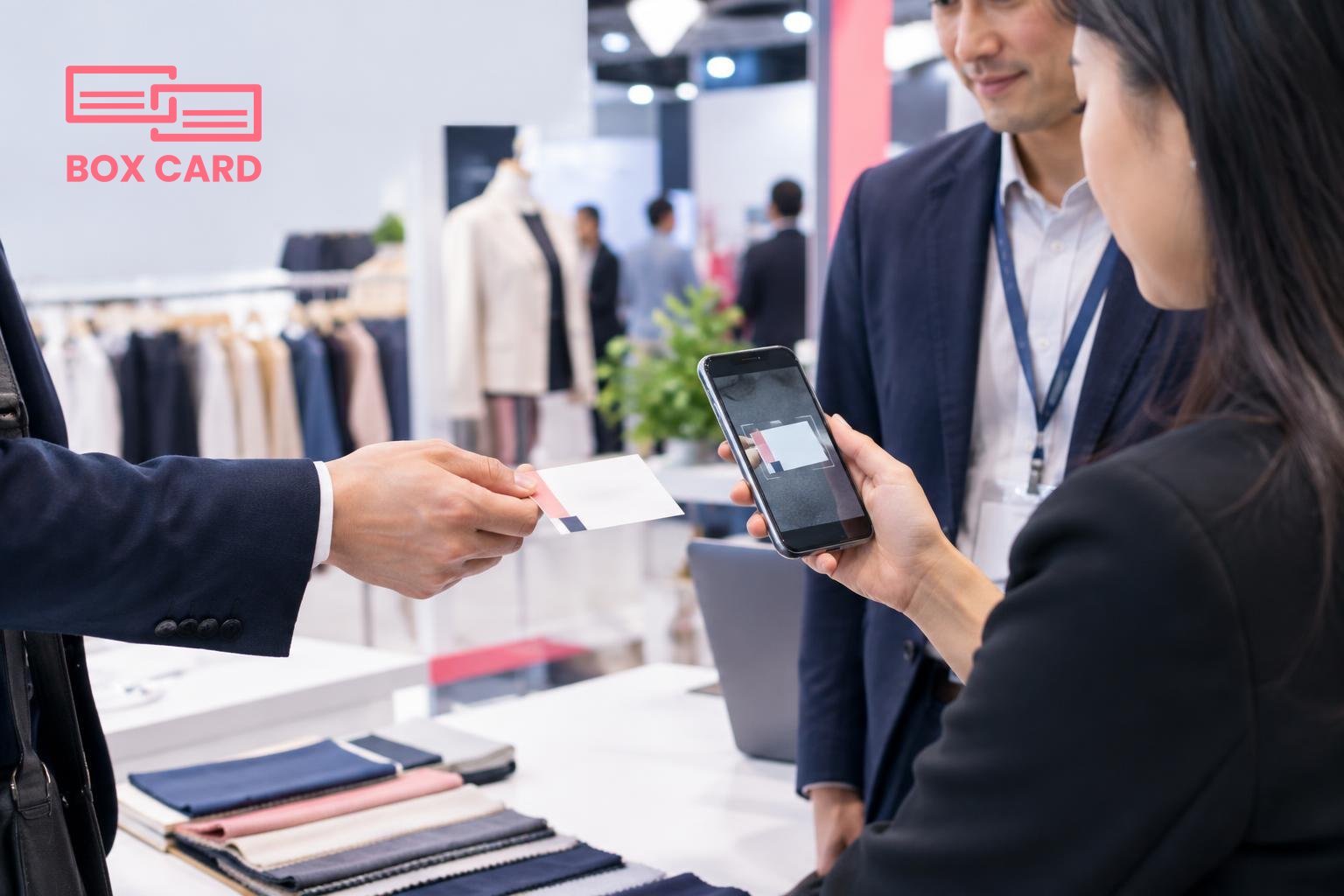
- Contact workflow tools. Install and test a business card scanning app on the team phones, and agree on tags and follow-up timing.
How to handle contacts during the show
At a busy fair you will collect dozens to hundreds of cards. The quality of your post-show outcomes depends on two things: how fast you record meaningful context for each contact, and how reliably that data is shared with colleagues.
- Ask for permission before scanning or photographing cards, then capture the conversation notes while the meeting is fresh.
- Record one-line context: product discussed, buyer role, next step, and a follow-up date.
- Use a consistent tagging system across the team such as: priority A/B/C, product category, and the market region.
- If you have multiple team members meeting different people, use a business card information sharing app so lists are centrally available.
How to digitize business cards
How to digitize business cards matters more than which app you pick. Pick a simple, repeatable process for the whole team and a single place to store contacts.
- Decide the app and storage: choose one Business card management app that everyone will use.
- Scan at the stand: capture the card immediately and add a short meeting note and tags.
- Sync to the cloud: enable Cloud business card management so every team member can access the updated list.
- Export or integrate: set up CRM integration before you leave so qualified leads flow into your sales pipeline automatically.
Examples of decisions you will make: use a business card scanning app that performs OCR well for the languages you expect. If you need a corporate-level backup and access across devices, prioritize Cloud business card management. If salespeople must share leads with others rapidly, choose a business card information sharing app with user permissions.
Tools and terms explained
These are the functions you should evaluate and the plain reasons they matter.
- business card digitization: turning paper cards into searchable contact records. It saves time and prevents lost contacts.
- business card scanning app: the mobile front end for digitization. Test speed, accuracy, and how it handles industry terminology.
- business card OCR app: OCR is the technology that reads printed text. Check how well it handles different fonts and non-Latin scripts present at IIGF.
- Business card management app: the app plus features for tagging, team access, and exports. Prefer one that keeps records consistent across users.
- CRM integration: critical when you want scanned leads to trigger follow-up tasks in your CRM tool.
- Sales support business card management: features that assign leads, add follow-up reminders, and attach meeting notes so sales has context.
One practical option to try during the fair is Boxcard. Boxcard supports basic business card digitization and organizing on mobile devices, so you can test scanning, tagging, and team sharing. Try the Boxcard scanning app or another Business card digitization app in advance so you know the workflow that suits your team.
Follow-up plan that actually converts
Most post-show losses happen because of delayed or generic follow-up. Use these timing and content rules.
- Within 48 hours: send a personalized email that references the sample or conversation point. Attach a capabilities sheet or a link to product images.
- One week: for warm leads, propose specific next steps such as a sample order, virtual factory tour, or pricing for first run.
- Two to four weeks: follow-up on logistics, compliance questions, and offer a timeline for production start.
Because many leads originate from exchanged cards, a fast scan-to-CRM path is essential. If you used a Business card management app with CRM integration, you can set automated reminders for each lead and avoid manual copy-paste errors.
Common mistakes to avoid
- Relying on memory. Always add at least one line of meeting context to a scanned card.
- Multiple systems. If different team members use different apps, your lead list will fragment. Pick one Business card digitization app ahead of the show.
- Delayed follow-up. Waiting more than a week reduces conversion probability significantly, because buyers move on to other suppliers.
- No ownership. Assign a follow-up owner for each lead during scan and tag records with that person.
When attending is the right choice
Attend IIGF if your goals include meeting multiple verified buyers from target markets within a short window, validating seasonal or scale-up demand, or finding distributors for specific regions. If you only want one or two buyer introductions, a targeted sourcing trip might be more efficient. For exporters and manufacturers who expect to process dozens of contacts, invest in a repeatable contact management workflow before you go.
Practical next step: choose and test a business card scanning app with team sharing, confirm Cloud business card management, and agree on tagging and handover rules with your team. If you want a quick trial, install Boxcard and run a dry run with three sample cards and a CRM export to confirm the end-to-end flow.
