Auto Expo India: Where Automotive Brands, Suppliers and Buyers Meet
If you attend Auto Expo India to meet suppliers, buyers, or brand partners, the single most important win is a consistent contact workflow: capture cards, digitize immediately, tag by priority, and follow up within 48 hours. This article shows how to prepare, capture, and convert leads efficiently.

You are going to Auto Expo India with a clear goal: meet manufacturers, suppliers, or buyers, collect meaningful contacts, and turn those conversations into actionable follow ups. The show is efficient only if your team captures contact details reliably, qualifies leads on the spot, and converts them after the event. This article explains who gets the most value from Auto Expo India, what to prepare, how to capture and categorize contacts at the show, and how to follow up so leads do not get lost.
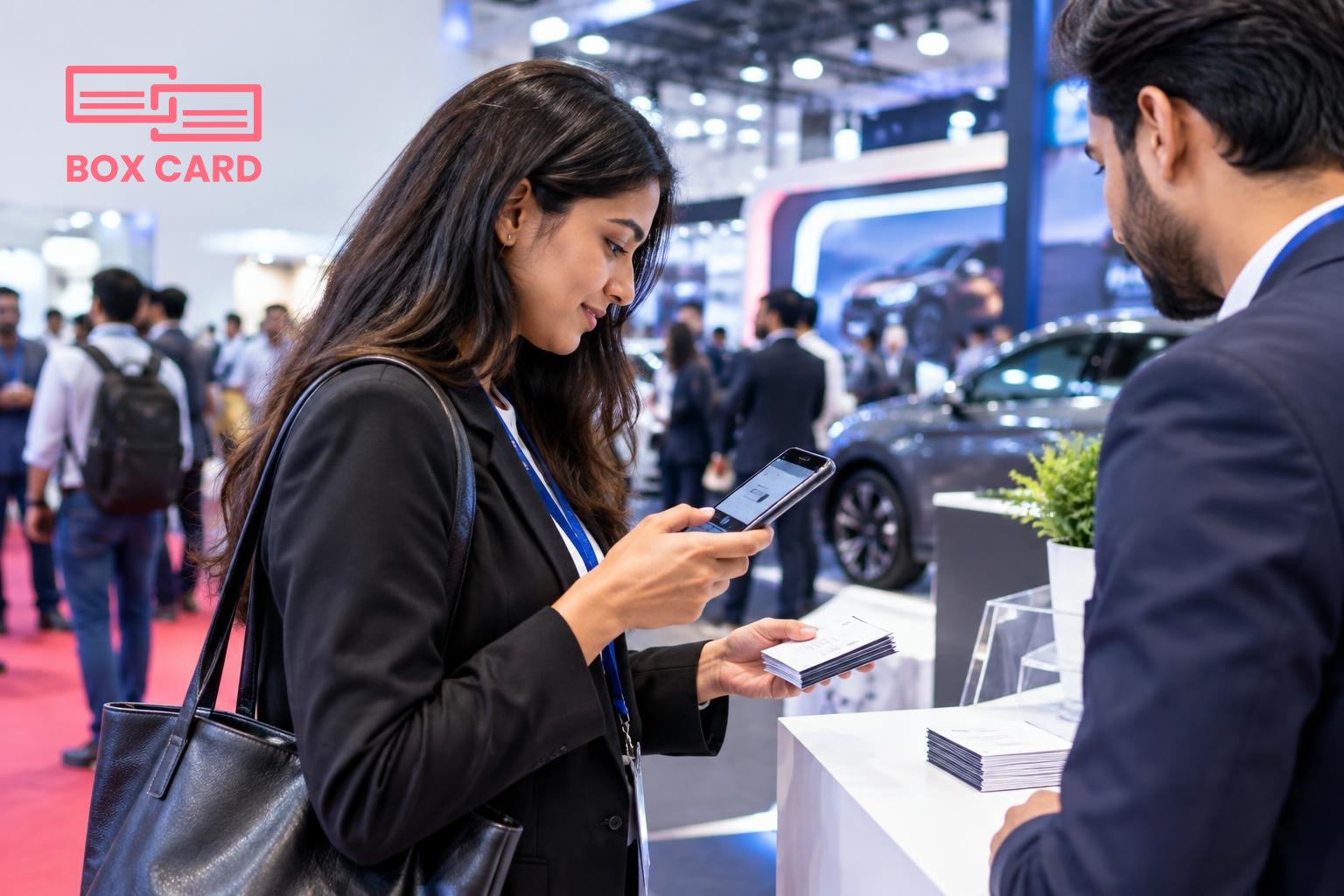
Image placeholder: a trade show attendee scanning a stack of business cards with a smartphone at a busy Auto Expo booth, editorial photograph.
Why Auto Expo India matters for buyers, suppliers, and brands
Auto Expo India brings together three groups in one place: product teams and OEMs showing new vehicles and components, suppliers offering parts and systems, and procurement or fleet buyers looking for partners. That concentration lets you do several things that are hard to achieve remotely: compare multiple suppliers quickly, inspect product samples, negotiate initial terms in person, and test technical fit through direct conversations.
Decisions you can reasonably make at the event include shortlisting suppliers, setting up pilot projects, placing small pilot orders, and identifying partners for local assembly or distribution. You will not close large contracts on the spot unless both sides arrive ready, but you can often establish the relationships and technical clarity needed to move toward a deal.
Who should attend and what they should aim to accomplish
Typical profiles and their objectives:
- OEM product managers: assess component suppliers and gather technical samples for immediate testing.
- Tier 1 and Tier 2 suppliers: present capabilities, negotiate supply frameworks, and meet potential buyers.
- Procurement and fleet managers: compare pricing and lead times across multiple vendors in one visit.
- Startups and technology providers: find pilot customers and engineering partners, and gather investor interest.
- Service providers and logistic partners: identify contract opportunities and introduce operational capabilities.
For each profile, set one clear success metric per day: for example, five qualified buyer meetings, three technical samples requested, or two supplier tours arranged. Those metrics will guide how aggressively you collect business cards and how you prioritize follow up.
How to prepare, two days before the show
Preparation separates useful meetings from wasted time. Do these things before you go:
- Research exhibitors and mark the ones you must visit. Prioritize by capability, not just brand name.
- Request meetings in advance for high-priority targets. Walk-ins work, but scheduled slots reduce waiting and increase quality.
- Prepare a one-page brief for your team: your goals, top questions to ask, and purchase timelines so conversations end with clear next steps.
- Decide how you will capture contact information and notes. Commit to a single system so data does not fragment after the show.
- Pack essentials: extra business cards, badge holder, smartphone power bank, a notebook for quick sketches, and a reliable business card scanning workflow.
On-site tactics to capture, qualify, and organize contacts
At the booth you have less than six minutes on average to make an impression. Structure each conversation to qualify the contact quickly and capture the information you will need to act.
- Start with two questions: what problem are you solving, and what timeline do you have for a decision? These reveal buyer intent fast.
- If the contact is promising, ask for a card and one technical contact if applicable. Make a one-line note on the card or in your app: product interest, timeline, and next step.
- If they do not carry cards, use their QR code or scan a business card photo. Confirm the preferred follow-up channel before you part.
Choose a capture method that you will use consistently. Options include a simple smartphone photo with manual entry, a dedicated business card scanning app, or a team-shared scanning device at the booth. Consistency matters more than the tool.
When selecting an app or service to handle your contacts, consider these categories and search terms as you compare options: Boxcard, business card management, business card scanning app, business card digitization, CRM integration, Business card management app, How to digitize business cards, business card OCR app, business card information sharing app, Cloud business card management, Boxcard scanning app, Business card digitization app, Sales support business card management, Boxcard business card management, AI business card scanner.
That list groups two kinds of needs: quick capture at the show, and team workflows after the show. If your team will share leads, prefer tools that support cloud sync and easy export. If a single person will own the follow up, a lightweight business card scanning app might be enough.
Sorting and following up after the show
How you process contacts in the 48 hours after the show determines conversion rates. Use this sequence:
- Scan and digitize every paper card the same day. If you rely on a phone photo, transfer and transcribe while the conversation is fresh.
- Tag contacts by priority: high, medium, low. Add one-line notes that matter for the next meeting: pricing constraints, technical requirements, and decision date.
- Export or prepare a follow-up sequence tailored to each priority level: immediate email, technical call, or proposal request. Keep the first follow up short and actionable.
- Track outcomes in whatever system your team uses for deals. If you do not use a CRM yet, create a shared spreadsheet with clear ownership and deadlines.
Follow-up timing that works in practice: send a brief thank-you and a concrete next step within 48 hours; arrange a technical discussion or sample exchange within two weeks; if the contact asked for a proposal, set the delivery date in the follow-up message.
Common mistakes teams make at trade shows and how to avoid them
- Collecting cards without context. A stack of unlabelled cards is a cost, not an asset. Always add one qualifying note.
- Waiting too long to digitize. The longer you wait, the more likely contacts will be forgotten or misentered.
- Using multiple capture tools without clear ownership. Fragmented data slows follow up and creates duplicate outreach.
- Treating every contact the same. A tailored follow up based on priority and role converts far better than a generic email blast.
- Ignoring privacy and consent. If contacts request restrictions, respect them and record the request with the contact.
Measuring success and deciding what to change next
Simple metrics to track after Auto Expo India: number of qualified meetings, rate of first response to your follow up, number of technical calls scheduled, and number of pilot or sample requests initiated. Compare those figures to your pre-show goals and adjust your booth staffing, pre-scheduled meetings, or capture workflow for the next event.
If your team struggled with lost cards or slow follow up, pick one change to test at the next event: require realtime scanning by the person who collected a card, or designate a single team member to own all digitization and distribution within 24 hours. Small process changes usually produce the best improvements.
Finally, if you want a straightforward way to handle the contact pile from Auto Expo India, try a focused business card workflow: collect cards, scan them immediately with a chosen business card scanning app, tag them by priority, and send a templated but personalized follow up within 48 hours. Using a consistent process will turn contacts into measurable opportunities.
Practical next step: before you arrive, choose the capture method your team will use and run one trial on a handful of cards. That dry run will reveal whether you need a Business card management app, a Business card digitization app, or only a quick manual process. With a plan in place you will get more value from every conversation at Auto Expo India.
