Hong Kong Jewellery Trade Shows: Building Business Connections Across Global Markets
Hong Kong jewellery trade shows generate many valuable leads, but the real work starts when you convert exchanged business cards into tracked opportunities. This article gives a practical workflow for capturing, qualifying, and following up on international contacts so booth conversations become sales and partnerships.

At major Hong Kong jewellery trade shows you will meet buyers from Europe, retailers from Southeast Asia, manufacturers from mainland China, and independent designers from around the world. Each conversation can open a market, but the practical challenge is the shape those opportunities take: dozens of business cards, follow up across time zones, and the need to turn brief booth talks into lasting commercial relationships. This article explains how to approach Hong Kong jewellery trade shows so you collect fewer loose leads and build real, actionable connections across global markets.
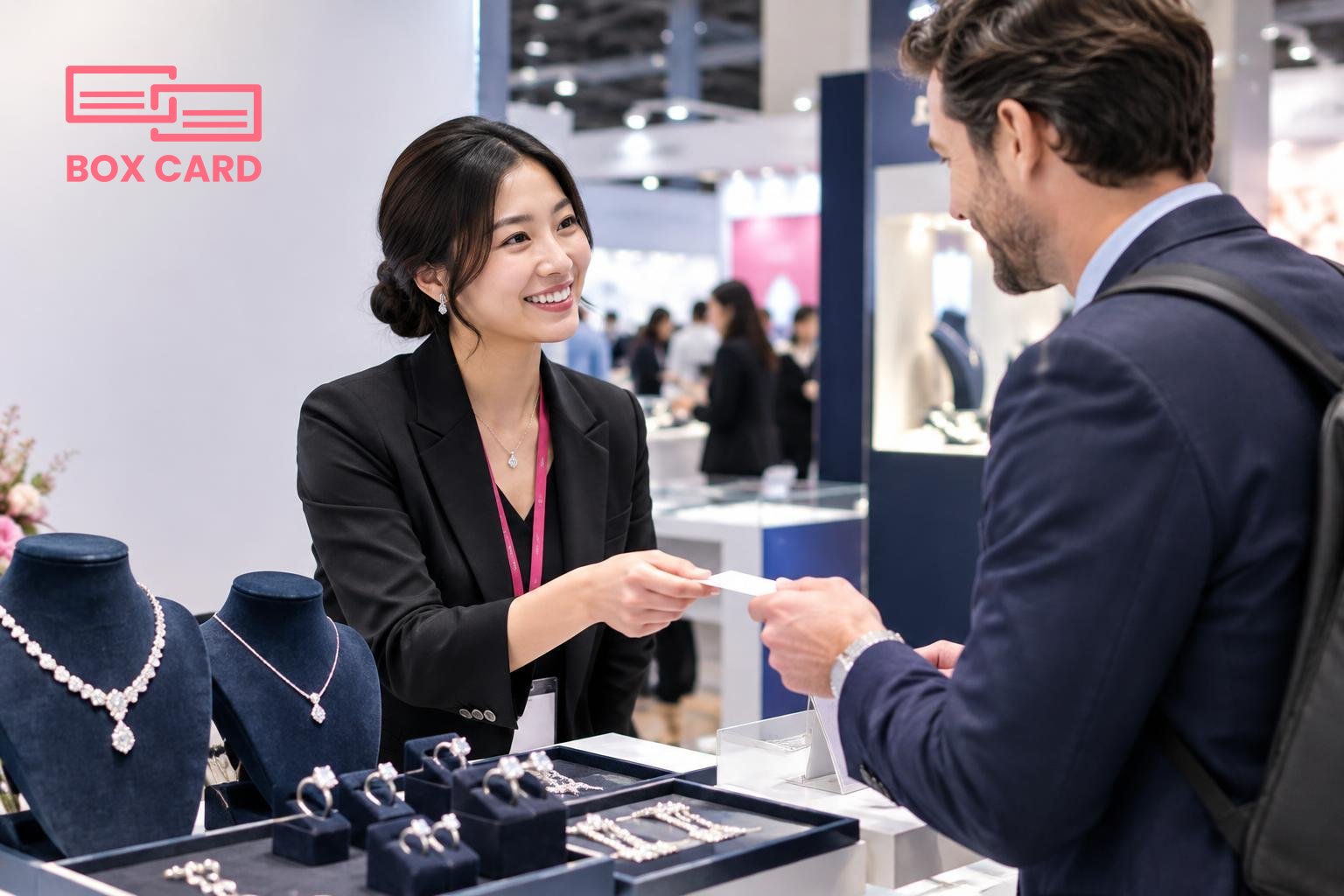
Image brief: An exhibitor at a Hong Kong jewellery trade show exchanging business cards with an international buyer, both smiling, tabletop display of necklaces and rings, other booths blurred in the background, editorial photograph.
Choose the right events and the right goals
Not all Hong Kong jewellery shows are the same. Some focus on finished retail collections and attract boutique buyers, while others are supply-chain oriented and draw component makers, gemstone dealers, and contract manufacturers. Before you book travel or a booth, be explicit about what success looks like for this trip.
- If your priority is retail distribution, target shows and pavilions known for finished jewellery and invited buyers. Your goal there is introductions to category managers and distributors.
- If you are sourcing production or specialty stones, target supplier trade halls and technical sessions. Your goal is sample approval, quotation timelines, and a factory tour request.
- If you want publicity and designer recognition, plan for a showcase slot, an eye-catching display, and scheduled press meetings.
Prepare a realistic outreach plan
One of the most common mistakes is treating every trade show like a single chance encounter. Instead, map your outreach before you travel. Create a short list of target companies and contacts, read exhibitor directories, and arrange meetings ahead of time. For walk-in leads, have a quick qualifying script so you know the next step before you swap cards.
Practical meeting types to schedule
- 15-minute product demos with targeted buyers, held at your booth.
- Factory conversations with suppliers, focusing on minimum order quantities and lead times.
- Informal coffee catch-ups with regional distributors to explore market fit and pricing tolerance.
Collecting contacts: quality over quantity
It is tempting to grab every card, but 200 unprocessed business cards after a show is a liability. Use a simple qualification rule at the booth: does this contact match one of your three post-show follow-up categories? If not, make a polite, time-limited exchange and move on.
How to record the right information on the spot
- Note the lead source: was the person a buyer, a distributor, a supplier, or press?
- Write one-line context: what product interest, what timeline, and any budget hints.
- Agree the next step and capture it immediately: schedule a sample shipment, a Zoom call, or permission to share a line sheet.
Use digitization to avoid lost leads
Handwritten notes go missing and stacks of cards invite error when you enter data later. Scan cards at the show and process them the same day. That reduces transcription mistakes and speeds follow up across time zones.
If you plan to digitize on the road, test your workflow in advance. Practice with a business card scanning app so you can scan reliably under show lighting. If you prefer cloud-based workflows, use Cloud business card management that syncs instantly to your laptop and team. When you scan, tag each contact by market and priority so you can filter the list later by country or follow-up type.
Turn cards into customers: follow-up that closes deals
Follow up timing is crucial. For warm leads you met in scheduled meetings, send a tailored message within 24 to 48 hours. For casual introductions, follow up within 3 to 7 days. Your follow-up should do three things: remind them where you met, restate the agreed next step, and include a succinct attachment or link that supports the conversation, such as a line sheet, a short video, or a simple pricing grid.
An effective follow-up sequence
- Day 1 to Day 2: Thank you email, reference to the booth conversation, and the promised material.
- Day 7 to Day 10: Short check-in with a tight CTA, for example, a proposal to set a quote or sample shipment date.
- Two weeks later: If no response, ask a single question that invites a yes or no answer, such as whether they want samples sent, or whether they prefer to pause the conversation for now.
Integrate contacts into your systems
Trade-show contacts must become usable data. Import important cards into your CRM so commercial colleagues can act on them. Many teams use a two-stage process: first, fast digitization on-site; second, validation and enrichment back at the office. That second stage is where you translate shorthand notes into full profile fields, attach sample photos, and set specific tasks for sales follow-up.
Consider CRM integration early. If you can automate the transfer from your cloud card manager to the CRM, you reduce manual steps and missed opportunities. This is especially important when multiple people need access to the same lead across different time zones.
Handle international leads with cultural and logistical care
Leads from different markets behave differently. A buyer in Japan may expect formal documentation and a lead time estimate. A Southeast Asian distributor may want immediate sample availability and competitive margin data. Ask a few market-specific questions at the booth so you can tailor the follow-up packet.
Common international follow-up tasks
- Confirm shipping rules and sample costs up front.
- Set clear payment and minimum order expectations.
- Provide product descriptions and jewelry care instructions in the buyer's language when appropriate.
Tools and workflows you can adopt
Bring one tool for capture and one for management. For capture, a reliable business card scanning app speeds data entry and reduces errors. For management, a consistent cloud folder or a Business card data management system lets sales and operations see the same information. If you will share contacts with colleagues, use a business card information sharing app that preserves original scans and notes.
Boxcard can be part of this workflow because it supports business card digitization and business card management. Use Boxcard scanning app at the show to capture cards, then move selected leads into your team workspace for action. If your process requires CRM integration, export or sync the contacts so they land directly in your sales pipeline.
Common mistakes and how to avoid them
- Collecting without qualifying: you will waste time. Use a two-question qualification at the booth to decide whether to pursue the contact.
- Delaying digitization: cards put aside become lost or unreadable. Scan on day zero and tag immediately.
- Sending generic follow-ups: personalize with the detail that shows you remember the conversation and the buyer's specific need.
Practical next steps
Before your next Hong Kong trip, pick one capture tool and one follow-up routine and practice them once. Draft two email templates: one for warm leads and one for casual introductions. Make sure your team knows where scanned cards will go and who is responsible for the next action. If you want to test a workflow, try a short run using How to digitize business cards as a checklist: scan, tag by market, add a one-line context, and assign a follow-up owner.
Trade shows in Hong Kong can open doors to multiple markets when you focus on converting conversations into trackable opportunities. The details you handle at the show and immediately after will determine whether those doors stay open or close. Adopt a repeatable capture-to-CRM routine, prioritize leads by concrete criteria, and you will turn the bustle of the show floor into measurable pipeline growth.
