Best Luxury Industry Events in Italy for International Professionals
This guide helps international professionals choose the most relevant luxury events in Italy, prepare for them, and turn conversations into real business. It lists the best fairs by sector, explains who should attend, and gives a practical checklist for onsite networking and follow-up.

You have limited travel time and a product or service that must reach wealthy buyers, retailers, or partners in Italy. Which industry event will deliver the contacts and conversations that matter, and how do you make those conversations turn into deals? This guide picks the best Italian luxury trade shows and fashion weeks for international professionals, explains who should attend each, and gives practical steps to prepare, network on site, and follow up effectively.
Quick note: these events serve different parts of the luxury chain. Choose by product category, decision maker you need to meet, and the stage of growth for your brand.
Top Italian luxury events and who should attend
Salone del Mobile.Milano (Milan)
Focus: high-end furniture, interior design, and product launches. This is where architects, interior designers, luxury furniture buyers, and lifestyle magazines discover trends.
Who should go: manufacturers of premium furniture and home accessories, brands seeking distribution in boutique showrooms, design agencies, and international architects sourcing collections.
What to expect: large exhibition halls, showrooms, and collateral design events across the city. Conversations tend to be product-focused and technical, with follow-up requests for samples or specification sheets.
Milan Fashion Week
Focus: womenswear and menswear collections shown by established houses and invited designers. This event attracts press, buyers, stylists, and large retailers.
Who should go: fashion brands with an established collection, PR agents, buyers from department stores and boutique groups, and fashion photographers. Emerging designers can benefit from fringe events and showroom appointments.
What to expect: scheduled shows plus a dense calendar of showrooms and private appointments. Access to the main schedule is limited; much business happens in showrooms and by invitation.
Pitti Uomo (Florence)
Focus: menswear, niche luxury labels, and accessories. Pitti is known for curated presentations and a strong buyer presence for premium menswear.
Who should go: designers of menswear and accessories, boutique buyers, stylists, and brands targeting international menswear buyers.
What to expect: brand discovery, trunk shows, and many targeted appointments. The atmosphere is more intimate than large general trade fairs.
Vicenzaoro (Vicenza)
Focus: fine and fashion jewelry, watchmaking, and component suppliers. Strong presence of retailers, distributors, and manufacturers.
Who should go: jewelry designers, component makers, private-label producers, and wholesale buyers looking for craftsmanship or new collections.
What to expect: technical discussions about sourcing and manufacturing, private showrooms, and opportunities to meet supply-chain partners.
Vinitaly (Verona)
Focus: fine wine, premium beverages, and related hospitality services. This is Italy's largest wine fair and attracts importers, sommeliers, hotel and restaurant buyers.
Who should go: premium wineries, luxury hospitality suppliers, wine importers, and sommeliers scouting boutique producers.
What to expect: tasting appointments, masterclasses, and buyer meetings. Business often moves from sampling to distributor agreements.
Mipel - The Italian Bag Event (Milan)
Focus: leather goods and accessories. Mipel is a targeted fair for luxury handbags, small leather goods, and contemporary artisans.
Who should go: artisanal leather brands, production partners, boutique buyers, and designers of accessories.
What to expect: product-focused meetings, order negotiations, and scouting for manufacturing partners.
How to choose the right event for your goals
- Match event focus to product category: design and furniture belong at Salone del Mobile, menswear at Pitti Uomo, jewelry at Vicenzaoro, and wine at Vinitaly.
- Decide your objective: brand exposure, immediate orders, supply-chain sourcing, or press coverage. Some events are better for discovery, others for closing deals.
- Target audience: trade-only events attract buyers and distributors. Fashion weeks attract press and influencers as well as buyers. Choose the event where your decision makers spend their time.
- Budget and time: large events require more personnel and appointments to make a dent. If you have a small team, select a focused fair where you can concentrate meetings over two days.
- Timing and product cycle: align product readiness with the event calendar. Trade shows are best when you have samples, pricing, and delivery timelines ready.
Practical preparation checklist
- Pre-book meetings: send concise introduction emails three to six weeks ahead. State what you bring to the buyer, and propose 20 to 30 minute slots.
- Prepare a pack: digital lookbook or product sheet, pricing ranges, MOQs, and shipping timelines. Keep physical samples light and representative.
- Local language and manners: basic Italian greetings and a one-sentence pitch in Italian help. Dress and punctuality vary by sector; fashion favors polished creativity, while wine and jewelry are more conservative.
- Logistics: verify visa requirements, hotel location relative to the venue, and how freight is handled for samples. Arrange translators only if you expect long technical discussions.
- Digital readiness: ensure your website and social profiles are updated and accessible to international visitors. Have a QR code linking to a press kit or digital catalogue.
Onsite networking that converts
Conversations at events are valuable because they are concentrated and immediate. Protect that value with a clear plan.
- Lead with a clear value proposition: say in one sentence why your product fits the Italian or global luxury market. Avoid long presentations unless asked.
- Ask three purposeful questions: who decides ordering, what price tiers sell best, and which markets the contact covers. These questions reveal next steps.
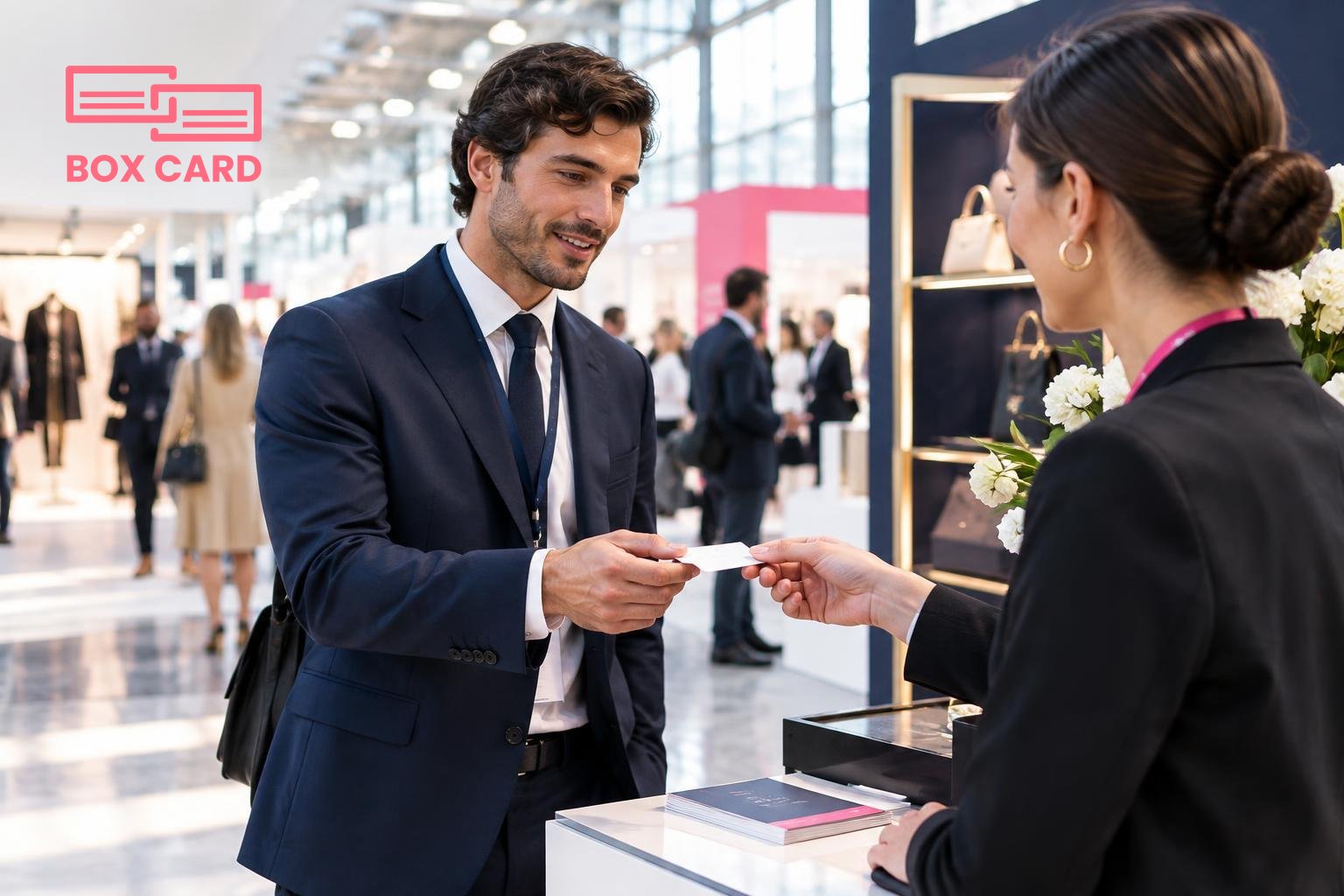
- Exchange contacts like a pro: use a business card or a digital card, then capture it immediately with a scanner app. If you use Boxcard, tag the contact with the event name and the action you agreed, for example, sample delivery or pricing email.
- Book a follow-up slot before you leave: ask for a phone call or video meeting date. A booked next step raises the probability of conversion sharply compared with a promise to follow up later.
Common mistakes and how to avoid them
- Showing up without appointments: you will meet fewer decision makers. Prioritize pre-booked meetings and use walk-ins for serendipitous contacts.
- Overpacking samples: heavy crates slow you down. Bring a curated selection and have high-quality imagery ready for buyers who want the full range.
- Neglecting follow-up: waiting more than a week to follow up often loses the lead. Aim to send a tailored follow-up within 48 to 72 hours.
- Not tracking outcomes: record who asked for what and the estimated value of each lead. Use simple tags: hot, warm, cold, sample sent, meeting booked.
Follow-up routine that gets results
- Within 72 hours: send a short thank-you email that restates the main point you discussed and the agreed next step.
- Attach clear materials: a one-page pricing sheet, lead time, and clear shipping terms remove friction from the decision.
- Use the right medium: buyers often prefer email for records. For hot prospects, follow the email with a message on LinkedIn or a short phone call.
- Track and schedule reminders: assign a next action and a date. If you used Boxcard or another contact manager, add event tags and follow-up dates immediately.
Final decision rule and next steps
Pick one major event and one smaller, highly targeted fair per year. Use the major event for visibility and press, and the targeted fair to close orders or secure supply partners. Book meetings early, travel with a sharp sample set, digitize contacts at the stand, and follow up within 72 hours using the exact terms you discussed. If you return with more than 20 contacts, sort them into hot, warm, and cold, then schedule actions for the top 10 within two weeks.
Attend the right events deliberately, and they will pay for themselves not in visits but in a few converted partnerships. When you scan and tag business cards immediately, you keep the momentum going long after the show ends.
