Will Digital Business Cards Completely Replace Paper Cards? A Practical 2026 Perspective
As digital business cards become more common, more companies are asking the same question: are paper business cards still necessary?
1. What Is a Digital Business Card?
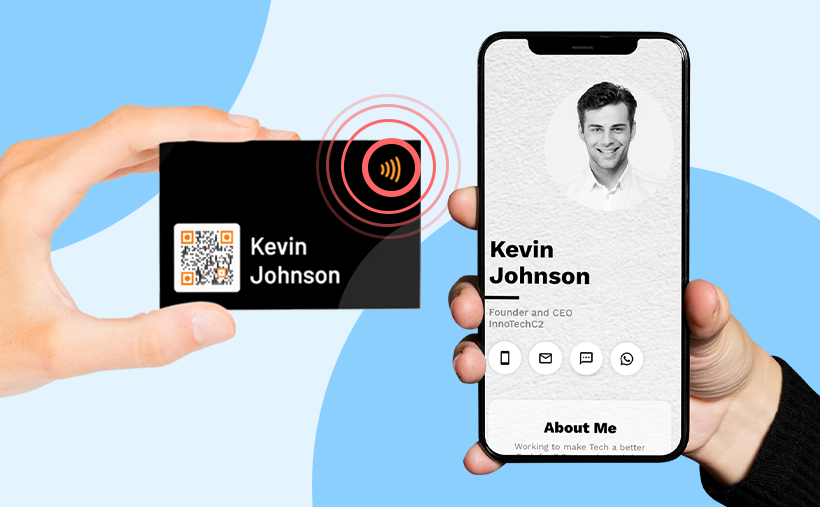
A Digital Business Card is a system for exchanging contact information digitally through:
- ・QR codes
- ・NFC technology
- ・Shared URLs
Additional Capabilities
Real-Time Updates
Users can instantly update:
- ・Departments
- ・Job titles
- ・Social media profiles
without reprinting physical cards.
Digital cards are especially effective when businesses need:
- ・Fast contact updates
- ・Richer content sharing
- ・Easier lead collection
Unlike paper cards, information only needs to be updated once before changes are reflected across all recipients.
CRM Integration
Digital business cards can automatically connect with:
- ・Sales workflows
- ・Marketing systems
- ・Customer databases
Expanded Information Sharing
Many digital cards now support:
- ・Portfolios
- ・Videos
- ・Booking pages
This allows businesses to share significantly more information than traditional paper cards.
2. Why Digital Business Cards Are Increasing
- Several factors are accelerating adoption.
Growth of Remote Work
- Online meetings and virtual events have increased the need for digital contact exchange.
Business Card DX Initiatives
- Companies are trying to solve problems related to:
- ・Paper card management costs
- ・Missed follow-ups
- ・Manual data entry
Automation and Data Utilization
QR codes, NFC, and scanning tools now allow:
- ・Instant CRM registration
- ・Automated follow-up workflows
- ・Contact analysis
Additional Market Trends
At global events, QR and NFC exchanges are becoming standard practice. Many international sales teams now primarily use digital business cards.
From an ESG perspective, companies are also recognizing the environmental benefits of reducing paper usage and lowering carbon footprints.
3. Why Paper Business Cards Still Remain
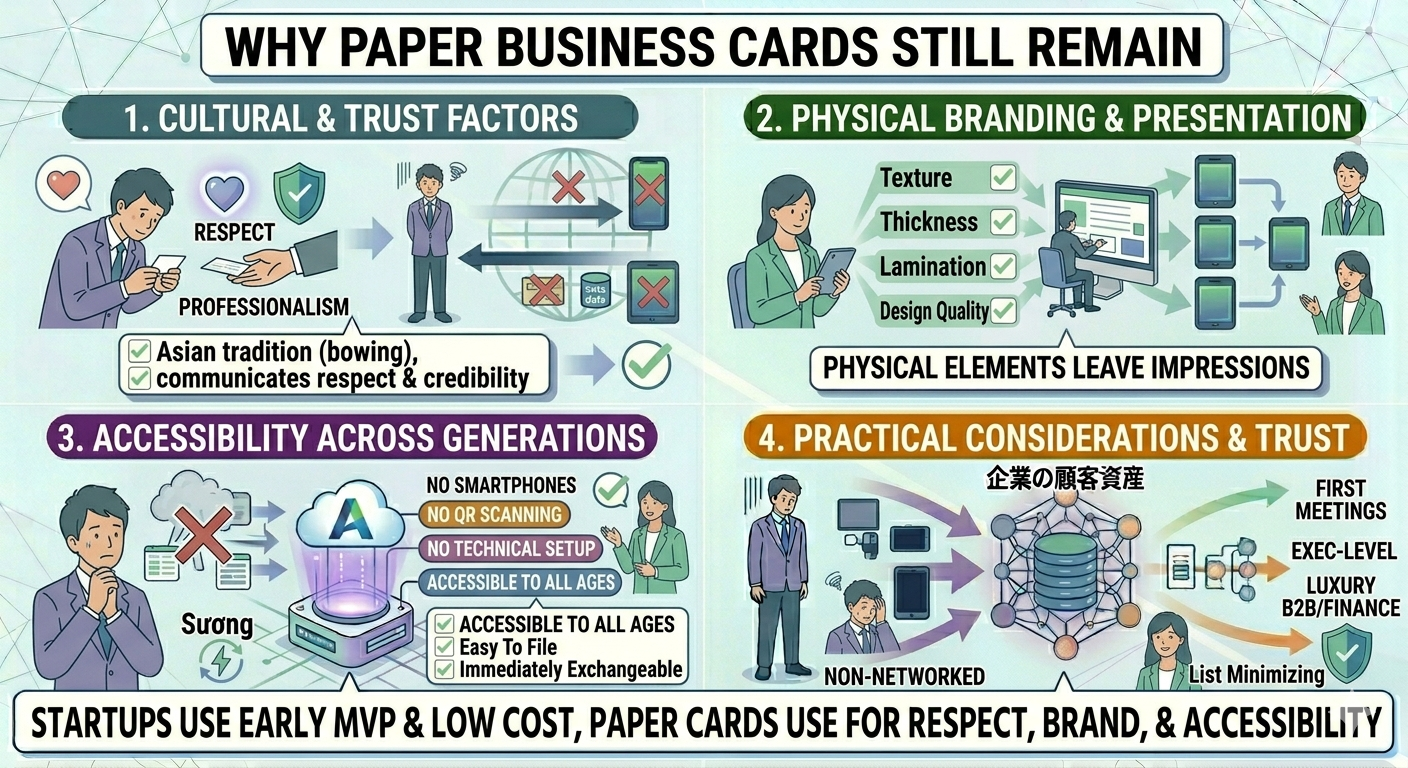
Despite digital growth, paper business cards continue to play an important role.
Cultural and Trust Factors
In countries such as Japan, Korea, China, Vietnam, the act of exchanging business cards with both hands is still viewed as a sign of respect and professionalism.
In relationship-driven business environments, physical cards often communicate seriousness and credibility more effectively than digital-only exchanges.
Physical Branding and Presentation
Paper cards communicate brand identity through:
- ・Texture
- ・Thickness
- ・Lamination
- ・Design quality
These physical elements leave impressions that digital cards cannot fully replicate.
Accessibility Across Generations
Paper cards require:
- ・No smartphones
- ・No QR scanning
- ・No technical setup
making them accessible to all age groups.
Additional Practical Considerations
For first meetings, executive-level discussions, and face-to-face sales, paper cards often create stronger trust than digital alternatives.
In luxury B2B industries and finance sectors, the physical quality of a paper card is still closely tied to brand perception.
Some recipients also prefer paper cards because they are:
- ・Tangible
- ・Easy to file
- ・Immediately exchangeable without apps or device setup
4. Advantages of Digital Business Cards
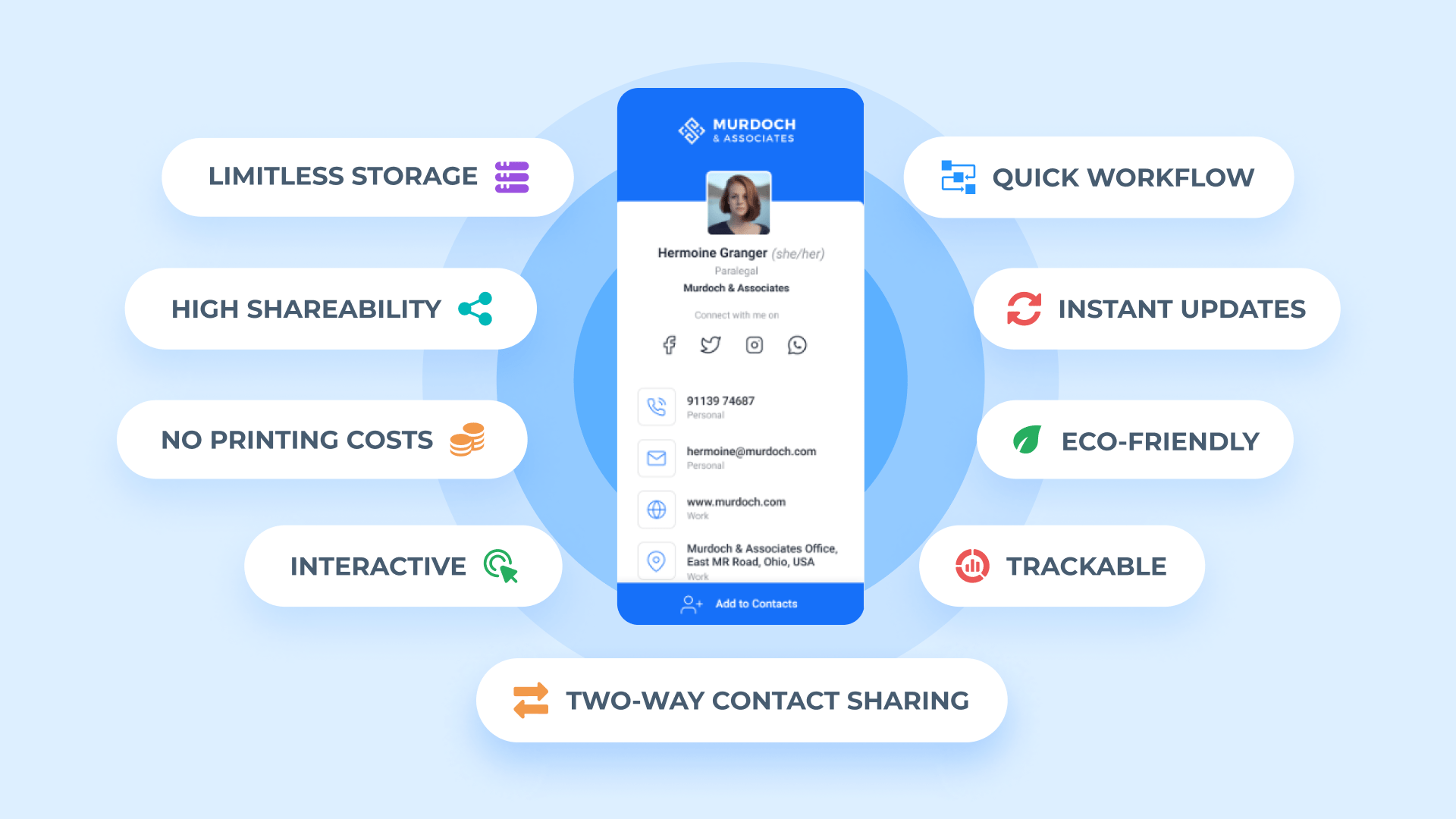
Digital business cards provide several operational advantages.
Instant Updates Without Reprinting
Information can be changed immediately without ordering new cards.
Automatic CRM Integration
Sales activities and follow-up status can be recorded automatically.
Rich Information Capacity
Digital cards can include:
- ・Social media links
- ・Portfolios
- ・Videos
- ・Reservation pages
Strong Compatibility for International Business
QR and NFC exchanges are becoming global standards.
Reduced Printing Costs
Companies no longer need:
- ・Large print runs
- ・Reorders
- ・Physical inventory management
Additional Benefits
At exhibitions, events, and seminars, digital cards greatly improve lead collection efficiency.
They also support ESG initiatives by demonstrating environmental awareness to both internal teams and external partners.
5. Challenges of Digital Business Cards
Cultural Differences
In markets like Japan, strong face-to-face business culture still makes paper cards feel more appropriate in many situations.
Device Dependency
・Digital cards rely on:
- ・Smartphone battery life
- ・Internet connectivity
- ・Device compatibility
Information Overload
Adding too many:
- ・Social links
- ・URLs
- ・Embedded content
can make digital cards harder to use effectively.
Behavioral and Workflow Barriers
The biggest barrier is often not technology, but user behavior.
Many professionals continue using both paper and digital formats because:
- ・Different industries require different communication styles
- ・Client expectations vary
- ・Meeting environments are not always the same
Additional Operational Challenges
In premium B2B industries, hybrid workflows combining paper and digital cards are often necessary.
Digital cards alone may not fully communicate brand quality or physical presentation value.
6. Practical Usage by Business Scenario
Scenario | Recommended Format | Additional Details |
First-time client meetings | Paper business cards | Prioritizes trust, etiquette, and first impressions |
Trade shows and exhibitions | Digital + paper | QR/NFC enables automatic registration while paper supports branding and trust |
International events | Primarily digital | Global QR/NFC standards enable instant data exchange |
Online meetings | Digital | Efficient for device sharing and CRM integration |
Executive or VIP meetings | Primarily paper | Focuses on professionalism, brand image, and reliability |
B2C businesses and creators | Primarily digital | Strengthens customer experience through reservations, social links, and coupons |
Additional Perspective
Hybrid operations are becoming the most realistic approach:
- ・Paper cards for trust and cultural expectations
- ・Digital cards for efficiency, automation, and ESG initiatives
Many companies initially maintain paper cards while gradually shifting toward digital-first workflows for exhibitions and online events.
The most practical strategy in 2026 is to combine both systems:
- ・Carry paper cards for formal introductions
- ・Add QR codes or NFC links that connect recipients to digital profiles, CRM forms, or contact pages
This hybrid model combines the etiquette and familiarity of paper with the flexibility and automation of digital systems.
For sales teams, it also improves follow-up efficiency and reduces the risk of losing customer contact data.
7. The Future of Business Card Operations
Business card management is evolving toward:
- ・AI OCR-based automatic scanning
- ・CRM, marketing, and sales automation integration
- ・Unified digital identity systems
The Most Important Perspective
The real question is no longer whether companies should choose paper or digital cards.
The more important issue is how effectively businesses can use customer contact data.
Business cards are no longer just physical cards or contact details. They are entry points for customer relationship data and sales activity.
8. Boxcard – AI Business Card Management in Practice
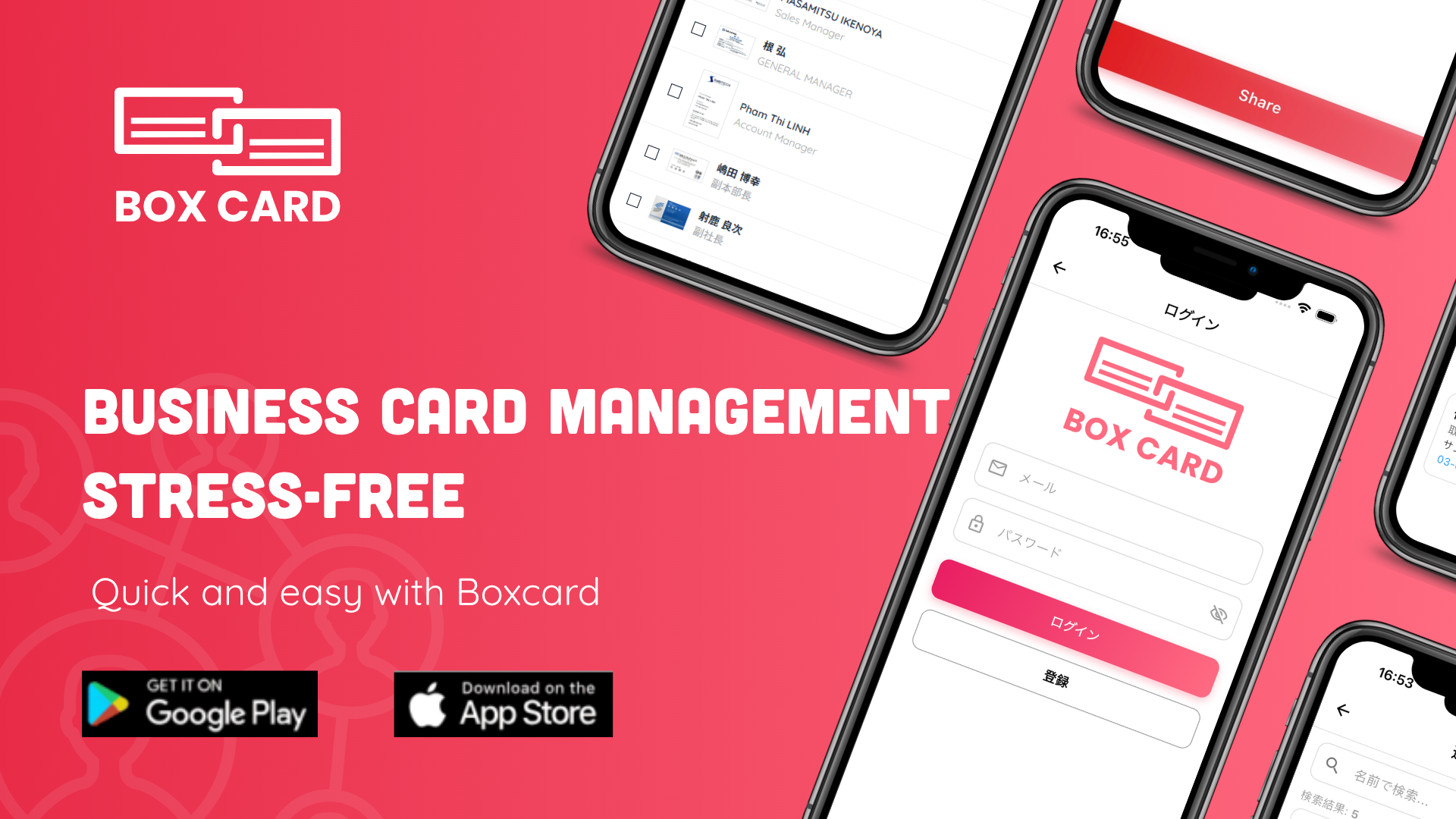
“Business card apps sound useful, but they’re often complicated, slow, or eventually require payment.”
If you’ve ever felt this way, BoxCard is a great option to consider.
Boxcard is designed with three key strengths in mind: simplicity, lightweight performance, and free access, making it easy for anyone to get started right away.
・Easy to use: Intuitive interface with no complicated setup
・Lightweight and fast: Smooth performance without lag
・Free to use: Core features available without hidden costs
・Multilingual support: Supports English, Japanese, Vietnamese, Korean, and Chinese (Simplified & Traditional)
What Makes BoxCard Different?
Many business card management apps offer advanced features but come with trade-offs such as high costs, complex interfaces, or heavy performance.
BoxCard takes a different approach by focusing on essential functionality with a seamless user experience:
・Streamlined workflow with minimal setup
・Fast scanning, organizing, and searching
・Core features fully accessible without requiring payment
As a result, BoxCard stands out by offering a balance between usability, performance, and cost-efficiency.
This makes it especially useful for professionals handling multilingual business cards or working in international environments.
Who Should Use BoxCard?
・Beginners looking for a simple solution
・Users who want a free and efficient tool
・Professionals managing multilingual contacts
・Anyone who prefers lightweight and easy-to-use apps
👉 Download BoxCard now on the App Store or Google Play and start managing your business cards more efficiently.
Digital business cards are growing quickly, but they have not fully replaced paper business cards as of 2026. In many market, paper cards remain important for trust and face-to-face business culture. However, digital cards offer advantages such as CRM integration and real-time updates. The most effective approach is integration, not replacement, combining both formats based on context, customer needs, and business workflows.
