Top Food Industry Events in France for International Businesses
This guide helps international food businesses pick the right French trade shows, prepare effectively, avoid common mistakes, and convert event meetings into revenue. It explains which event types match specific goals and gives a practical exhibitor workflow with lead capture tips.
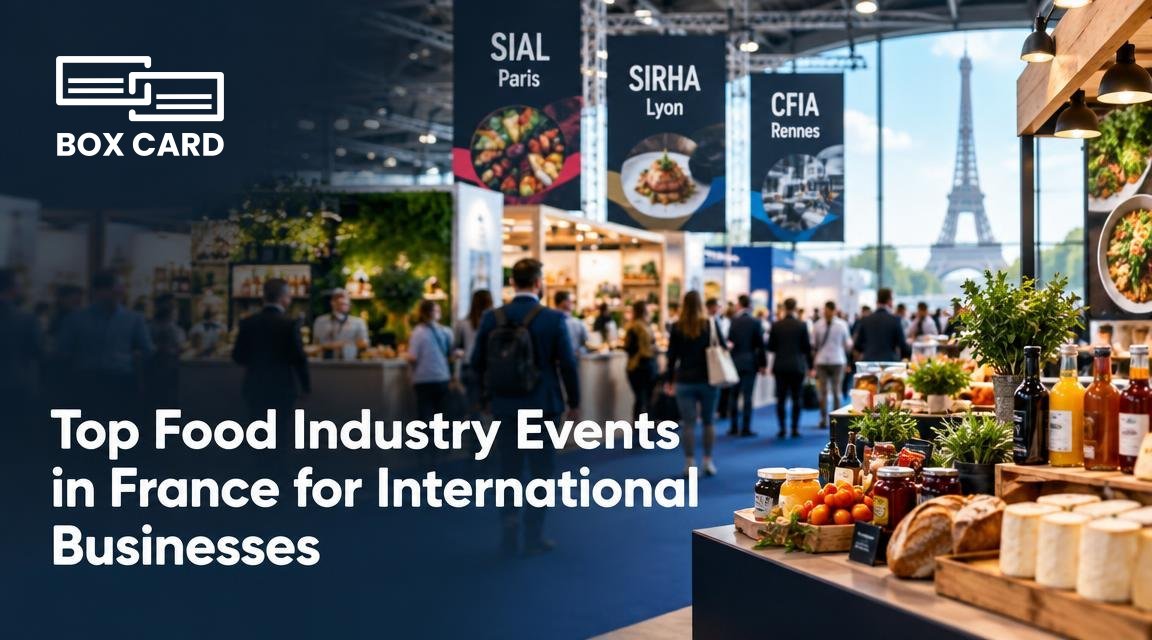
Your company is planning trade shows in France, but you need to know which events actually deliver buyers, distributors, and useful partner meetings for your segment. This guide lays out the kinds of French food industry events that matter for international businesses, gives concrete examples you should investigate, and explains how to decide where to spend travel and exhibiting budget.
Which event types matter, and why
Different events serve different goals. Pick the type that matches what you want to achieve.
- Global trade shows: Best when you need broad exposure to retailers, importers, and foodservice chains across many product categories, or when you want to launch a new product into European distribution channels.
- Foodservice and hospitality trade shows: Ideal for equipment suppliers, ingredients for professional kitchens, and brands targeting restaurants, hotels, or catering groups.
- Ingredients, processing and packaging fairs: Useful if you are a supplier to manufacturers, or you want to partner with French manufacturers for co-packing or private label work.
- Specialist shows: organic, healthy, or beverage-specific: These let you reach niche buyers with a high conversion rate because attendees come looking for those precise products.
- Public-facing agricultural and food fairs: Not primarily B2B, but valuable for consumer testing, brand visibility, and sourcing small producers or craft partners.
Top events to research
Below are well-known events that represent each category. Do not treat this as an exhaustive list, but use it to prioritize your planning.
SIAL Paris
Why it matters: SIAL is one of the most international food trade shows in France. Retail buyers, importers, and brand scouts from across Europe attend to find new products and sourcing partners. Who should go: consumer food brands, exporters, and companies launching products into European retail.
SIRHA (Lyon)
Why it matters: SIRHA focuses on foodservice, professional equipment, and hospitality, and it attracts chefs, hotel groups, and large caterers. Who should go: equipment makers, ingredient suppliers to the HORECA market, and service providers for professional kitchens.
CFIA (ingredients, processing, packaging)
Why it matters: CFIA concentrates on the supply chain behind food manufacturing: ingredients, processing, automation, and packaging. Who should go: ingredient manufacturers, suppliers of processing equipment, and co-packing partners.
Industry shows for organic and health products
Why they matter: Organic and natural product fairs gather specialised buyers and distributors who focus on health, food supplements, and organic retail. Who should go: producers of organic products, health food brands, and companies seeking distributors in the natural channel.
Wine and beverage fairs
Why they matter: Beverage-focused expos gather sommeliers, importers, and beverage distributors. Who should go: wineries, craft beverage producers, and beverage trade representatives looking for on-trade and off-trade partners.
Salon International de l'Agriculture and similar public fairs
Why they matter: These fairs are consumer-facing and excellent for market testing, packaging feedback, and building brand awareness with French consumers and regional buyers. Who should go: artisan producers, brands testing new SKUs, and companies wanting direct consumer feedback.
How to choose which events to attend
- Set a single primary objective: Find distributors, test a product, secure a co-packer, or meet retail buyers. That objective will rule out many events that look attractive but will not serve your goal.
- Match attendee profiles to your objective: Ask the organizer for a buyer list, exhibitor list, or attendee demographics. If the show does not provide that information, treat it as a warning sign.
- Check route-to-market costs: Consider not only booth fees, travel, and samples, but also customs for samples, translation, and local marketing. An event that brings the right contacts can justify higher upfront costs; a generic show rarely does.
- Decide between exhibiting and visiting: Exhibiting gives exposure and meetings, but demands staff and lead capture processes. Visiting is lower cost and useful for market research and targeted meetings.
- Plan timing: Book logistics and hotel rooms early, and allow time to arrange meetings with distributors ahead of the event.
Preparing to get measurable results
Attending a show without a clear follow-up strategy is the most common mistake. Use this checklist to turn conversations into business.
- Pre-event outreach: Identify target buyers and send meeting requests before the show. People schedule meetings in advance; expect walk-ins but do not rely on them.
- Specify samples and compliance: Prepare sample packs with clear ingredient lists, bilingual labeling if possible, and documentation for customs. Smaller, well-packaged samples convert better than large unbranded boxes.
- Staffing and roles: Assign one person to sales conversations, one to technical questions, and one to capture contacts and schedule follow-up. Do not let your best salesperson spend the show time on administrative tasks.
- Lead capture and tagging: Capture full contact details at the point of exchange and tag leads by priority and interest. Use a tool that digitizes business cards and ties them to notes, so you do not lose follow-up context.
- Post-event follow-up: Send personalized follow-up within 48 to 72 hours. Include the sample details, next steps, and a clear call to action such as a tasting, quote, or contract draft.
Common mistakes to avoid
- No prequalified meetings: Expecting serendipity is risky. Reach out to buyers and partners in advance to secure time slots.
- Poor lead hygiene: Collecting business cards without notes or tags makes follow-up inefficient. Digitize and prioritize leads at the end of each day.
- Over-committing staff: Sending only one person who must handle all tasks reduces your conversion rate. Bring at least two people with defined responsibilities for a small booth.
- Ignoring local rules: Failing to check sample rules, language expectations, or labeling requirements can create delays or prevent you from showing product samples.
How to track ROI
Turn event metrics into a decision rule for next year. Use a simple funnel: leads contacted, meetings held, samples sent, quotations requested, and deals closed. Assign a projected revenue to high-quality leads and compare that to total event cost. If you cannot estimate projected revenue, classify leads by realistic conversion probability and use that to compare events.
Practical example workflow for an exhibitor
- Eight months before: choose 1 or 2 target shows that match your objective and budget.
- Six months before: reserve booth space, begin pre-event outreach to target buyers, and plan sample logistics.
- One month before: finalize staff roles, prepare bilingual collateral, and set meeting calendar.
- At the show: capture contacts digitally, tag each contact by priority, and schedule any on-site follow-up meetings.
- Within 72 hours after: send personalized follow-ups and record responses in your CRM. Move interested leads into a short pipeline with clear next steps.
Using Boxcard at events
Boxcard is useful for the lead capture and follow-up steps: scan business cards instantly, tag contacts by event and interest, add short notes about the conversation, and export lists for your sales team. That reduces manual transcription and guarantees you will reach buyers while your meeting is still fresh in their mind.
Pick the event that matches your primary objective, prepare the right materials and staff, and have a fast, disciplined follow-up. That combination decides whether a trade show becomes revenue or just an expense.
Next step: pick one primary objective for the coming year, choose one trade show type from the sections above that best serves that objective, and begin pre-event outreach now. If you want, share your objective and I will recommend which specific show to prioritize and a tailored checklist for exhibiting or visiting.
