Singapore International Business Events 2027: Connect with Global Companies and Partners
Choose events that match a single measurable outcome, prepare targeted meetings, and digitise every contact quickly. Use a short follow-up workflow and a tool like Boxcard to turn event conversations into concrete next steps.
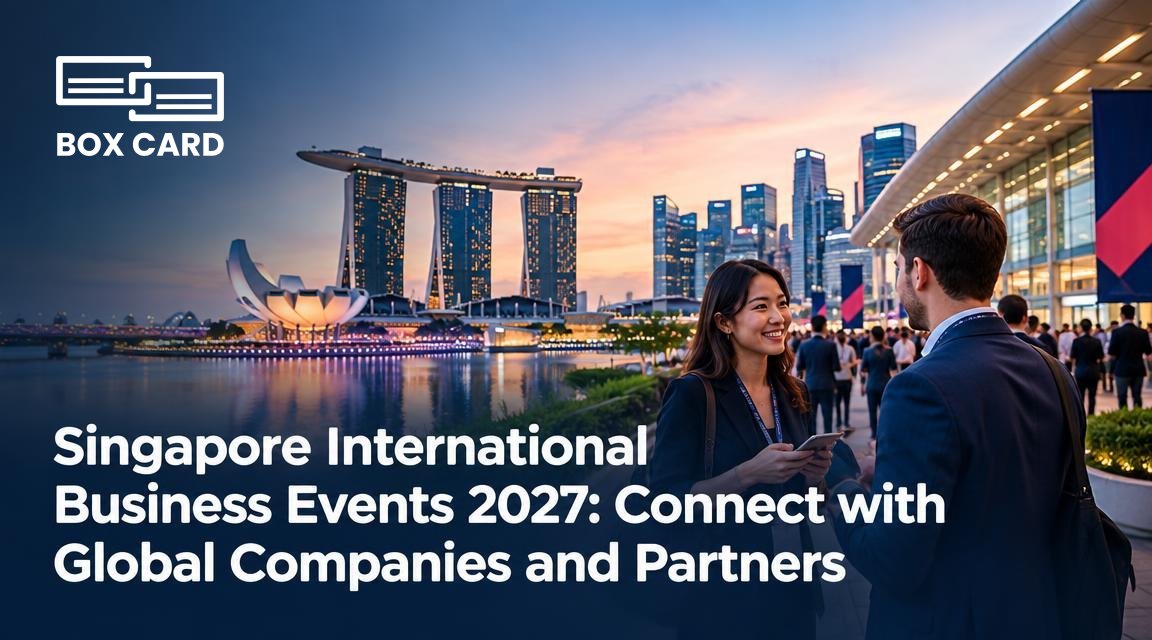
Planning to meet global companies in Singapore 2027? Start with a clear goal
You may be looking at Singapore because it attracts international buyers, regional headquarters, and fast-moving startups. Before you pick events, decide what you want to achieve: find distribution partners, raise capital, recruit engineers, close customers, or learn about a new market. The right event and the right preparation depend on that single choice.
Which kinds of international business events matter in 2027
Singapore hosts a range of event formats. Pick the formats that fit your goal.
- Industry trade shows and expos: Best for product demonstrations, sourcing partners, and meeting purchasing teams.
- Conferences and summits: Good for thought leadership, meeting senior executives, and investor visibility.
- B2B matchmaking programmes and buyer-seller forums: Structured meetings with qualified leads, often pre-matched by organisers.
- Investor and startup showcases: Useful if you are fundraising or scouting early-stage partners.
- Workshops and training events: Smaller groups, deeper conversations, useful for recruiting or educating partners about a new product.
How to choose which events to attend: a practical filter
Use these criteria to narrow a long list to the events worth your time.
- Match to your primary outcome: If you want distribution partners, a trade show beats a keynote conference. If you need investors, pick a startup or investor-focused showcase.
- Quality of attendees: Look for events that publish exhibitor and speaker lists so you can see which companies will be there. Prioritise events attended by the types of companies you want to reach.
- Format and timing: Hybrid events are convenient but less effective for new relationships. If quick decisions are required, plan for in-person meetings.
- Cost versus expected return: Factor registration, travel, accommodation, and time away. If the event offers pre-arranged meetings, that can justify a higher fee.
- Ability to pre-book meetings: Events with an app or matchmaking system let you schedule meetings ahead, which multiplies your efficiency on-site.
Prepare before you land: practical to-dos
Two weeks to two months before the event is the moment to be deliberate. Small actions before the first handshake multiply returns.
- Research and shortlist targets: Identify 20 to 50 companies you want to meet. Find names of decision makers on LinkedIn so you can approach the right people.
- Set meeting goals: For each target, set a single measurable goal: schedule a demo, collect terms, agree to a pilot, or exchange contact details for follow-up.
- Create a compact pitch: Prepare a 30 second description of what you offer, and a one page PDF or website link that summarizes benefits for partners.
- Prepare digital assets: Use a clean digital business card and short meeting agenda you can share quickly. If you use Boxcard, scan any paper contacts you already have, and create tags for the event so newly captured contacts are organised immediately.
- Arrange logistics: Book accommodation close to the venue when possible, and pre-register with the event app. Reserve meeting rooms or offsite hospitality if you expect lengthy conversations.
Networking tactics that actually work at busy events
When the show floor is crowded, follow these tactics to convert encounters into real opportunities.
- Quality over quantity: Aim for 8 to 12 meaningful conversations per day rather than trying to collect hundreds of business cards. Deep conversations lead to commitments.
- Open with value: Start with a specific question about the other person: a market challenge, a timeline, or a procurement cycle. Then explain how you can help in one sentence.
- Use meeting triggers: If someone asks for more info, schedule a 15 minute follow-up within 48 hours while interest is fresh.
- Capture context immediately: After each conversation, add a short note about the topic and next step to the contact. If you use Boxcard, scan or add the business card and attach your note in the app, so nothing is lost in the crowd.
Common mistakes that waste time and how to avoid them
- Collecting cards without follow-up: A pile of cards is useless. Commit to a follow-up action within 48 hours for each key contact.
- Short-term thinking: Don’t try to close big deals on the spot unless both sides are ready. Use the event to create a clear next step: pilot, proposal, or meeting.
- Over-planning the schedule: Leave 30 to 60 minutes between meetings for travel, notes, and unexpected introductions.
- Relying only on paper cards: Physical cards are fine, but they must be digitised and categorized quickly. Manual re-entry the week after the event is error-prone and delayed.
Follow-up workflow that actually moves relationships forward
- Scan and organise within 24 to 48 hours: Digitise cards, and tag contacts by priority and topic so you can run focused follow-ups.
- Send personalised follow-ups: Reference the conversation, attach the one page summary, and propose a clear next step and a short time window.
- Track commitments: Add meetings, proposals, and action items to your calendar and task list. Assign owners if you work with a team.
- Nurture the pipeline: For contacts that need more time, schedule periodic updates or share useful content related to their challenge. Keep the relationship moving with small, relevant touches.
Using Boxcard to keep your event contacts useful
Boxcard can make the contact capture and follow-up process faster. Use the app to scan business cards on-site, correct any OCR errors, and add tags that match event themes or priority levels. Attach a short note after each conversation so the reason for the connection is clear when you return to the contact later. When you need to move a contact into a CRM, you can copy details or export them for manual import according to your usual process.
Capture the context, not just the card. The note you write after the conversation creates the value of the connection.
Practical notes about Singapore logistics
Plan for heat and humidity when choosing attire. Travel time between central hotels and major venues is usually short, but allow buffer time in the schedule for peak-hour traffic. Singapore business etiquette values punctuality and direct, courteous communication. If you need visas or specialised permits, start the paperwork early to avoid last minute problems.
A simple decision rule to plan your 2027 Singapore event calendar
Pick events that let you meet at least 10 decision makers directly for each day of attendance, or events that include a reliable pre-matched meeting service. If an event meets that rule, the direct cost and travel time are justified. Otherwise, choose a smaller workshop or arrange bespoke meetings with target companies instead.
Next step: choose one target outcome, pick two events that match it, block travel and meeting slots, and prepare a short digital asset and a scanned contact workflow using Boxcard or your preferred tool. That combination turns busy event days into measurable business progress.
