Top Startup and Technology Events in Europe for Founders, Investors and Entrepreneurs
Choose events that match your stage and measurable goals, then turn conversations into outcomes by scanning contacts, tagging them with event context, and importing them into your CRM for timely, personalized follow-up.
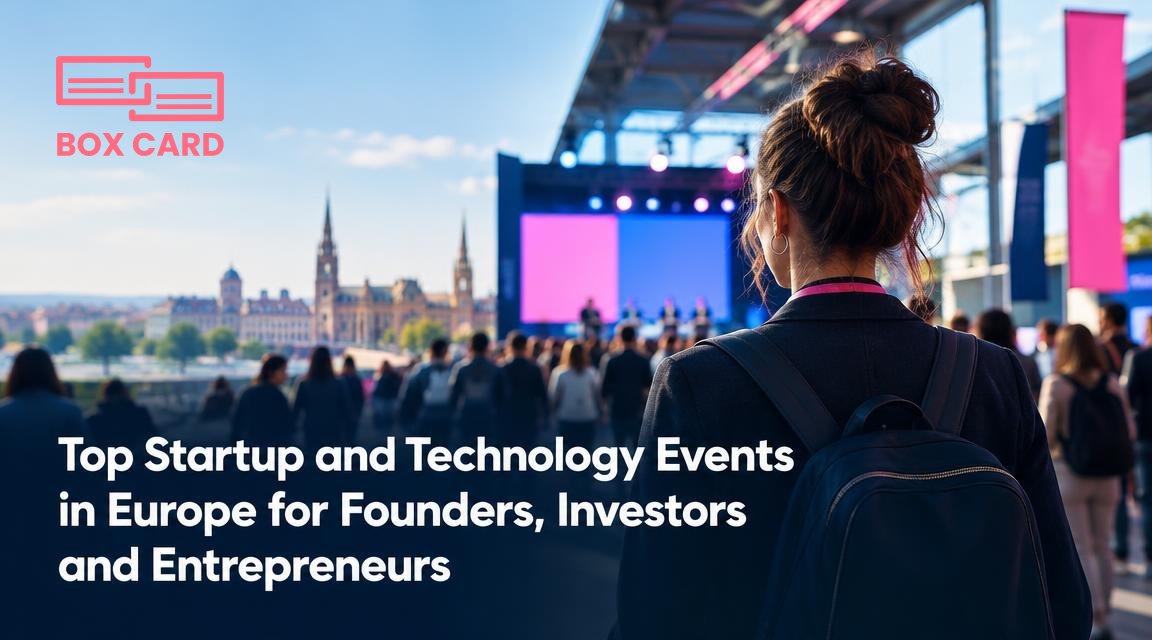
You cannot attend every tech conference in Europe, and the wrong choice wastes time and budget. This guide helps founders, investors, and entrepreneurs pick events that match their stage, industry focus, and networking goals. For each event I explain who should go, what you can realistically achieve there, and how to prepare so you leave with meetings, partners, or investors rather than a pile of unread business cards.
Which events matter for which goals
Before the event list, decide what success looks like. Here are practical decision rules:
- Raise pre-seed or seed: prioritize founder-focused festivals and pitch stages where angel investors attend.
- Raise Series A and up: target curated investor conferences and demo days with structured 1-on-1s.
- Find customers or pilot partners: choose sector trade shows where your ideal buyer has a booth or delegation.
- Hire talent and build awareness: go to larger tech festivals with strong media presence.
Top events in Europe, and who should attend
Web Summit, Lisbon
Who should attend: founders who want broad visibility, startups seeking press and enterprise leads, investors looking for dealflow across sectors. What to expect: massive scale, packed halls, a mix of startups and corporates. When you go, pick standouts in the agenda and prebook meetings, because serendipity alone will not connect you with top targets.
Slush, Helsinki
Who should attend: early to growth-stage startups in deep tech, cleantech, and software, plus VCs hunting Nordic and Baltic dealflow. What to expect: founder-driven vibe, strong angel and VC presence, lots of founder-to-founder mentoring. Use the pitch and matchmaking features; they are effective for early-stage introductions.
VivaTech, Paris
Who should attend: startups focused on enterprise tech, AI, mobility, and hardware that want to meet corporate partners. What to expect: a corporate-heavy attendee list and many innovation programs run by major companies. Prepare a concise enterprise use case and customer success materials to start conversations with corporate open innovation teams.
Mobile World Congress, Barcelona
Who should attend: mobile, telecom, IoT, and hardware startups targeting carriers and device makers. What to expect: industry procurement teams and technology partners. If you sell to carriers, arrange pilot meetings months in advance and use on-site demos.
TNW Conference, Amsterdam
Who should attend: digital product startups, platform companies, and investors focused on European tech markets. What to expect: a good mix of founders and operators, practical workshops, and a lively startup alley for visibility.
SaaStock, Dublin
Who should attend: SaaS founders and investor partners. What to expect: focused sessions on pricing, growth, onboarding, and churn reduction. If your product is subscription-based, this event will yield actionable contacts and potential buyer introductions.
Bits & Pretzels, Munich
Who should attend: founder communities, early-stage startups, and entrepreneurs looking for storytelling and founder networking. What to expect: structured, founder-oriented programming with many roundtables and casual meetups that make follow-ups easier.
Tech Open Air, Berlin
Who should attend: startups interested in cross-disciplinary networking between tech, art, and design. What to expect: festival atmosphere, great for hiring and brand building among creative and engineering communities.
NOAH Conference, London and Berlin
Who should attend: growth-stage startups and investors focused on digital commerce, adtech, and enterprise enablement. What to expect: curated investor meetings and panels with senior corporate partners looking for scale-stage opportunities.
How to prepare: practical checklist for founders and investors
- Clarify goals: aim for a number, such as five qualified investor meetings, three pilot conversations, or ten press leads.
- Prioritize attendees: review speaker and sponsor lists, then request meetings before the event. Cold messages work less well than warm intros through mutual connections.
- Pack the right materials: 1-page investor one-pager, 2-minute demo or product video, and concise case studies for customer conversations.
- Plan a lightweight pitch: 30 seconds to explain the problem and traction, and one sentence on the ask: funding amount, pilot, or hiring. Practice until it fits naturally into drinks conversations.
- Schedule recovery time: limit back-to-back sessions to preserve energy for meaningful follow-ups.
What to do with business cards and contacts at the event
Collecting cards is not enough. A disciplined post-event workflow turns introductions into opportunities.
- Scan cards immediately, ideally before you leave the venue. If you collect stacks, scanning on the same day keeps details fresh.
- If you want a fast solution, use a business card scanning app to capture contact data, tag it by event and conversation topic, and attach meeting notes. A good app saves time and reduces transcription errors.
- Consider using Boxcard for bulk scanning and organisation. Boxcard supports business card digitization and can help you standardize contact records. For teams, Boxcard scanning app or a business card management app makes shared follow-up simpler.
- If you need automated text recognition, a business card OCR app can extract names, titles, phone numbers, and company data. High-accuracy business card scanning app options reduce manual cleanup.
- Connect scanned contacts to your CRM. CRM integration is crucial: it means event leads flow into your sales process and your CRM business card management stays current.
If you need step-by-step help on capturing and organizing cards, search for How to digitize business cards workflows and test a couple of apps to find the one that matches your CRM and team habits. Some teams prefer Cloud business card management for shared access, while others prioritize a Free business card management option for small budgets.
Follow-up that actually converts
Timing and personalization decide whether a meeting becomes a relationship:
- Contact within 48 hours. Reference the specific conversation and a next step, for example, a 20-minute demo or an intro to a colleague.
- Use the notes you attached when scanning cards. Mention a detail from the talk; it shows you were listening.
- For investor leads, send a concise update packet that includes traction metrics and the specific ask. For customer leads, suggest a pilot timeline and clear deliverables.
- Track all follow-ups in your CRM. If you used a business card data management system, export contacts and import them into the pipeline stage that matches your follow-up plan.
Common mistakes founders make at events
- Trying to pitch everyone. Tailor the conversation to the person you are speaking to and ask a question before your pitch.
- Collecting cards without logging context. Without tagging and notes, a card is data without intent.
- Relying on business cards alone. Some decision makers prefer LinkedIn or email. Ask for the preferred channel, then record it in your contact management flow.
- Skipping the calendar invite. If you agree on a next step, set the meeting on the spot to avoid losing momentum.
How to choose which event to book
Decide using a two-step filter: alignment and ROI. First, does the attendee mix align with your goal? Second, estimate the expected return: meetings you can schedule and convert in the next 90 days. If both answers are positive, book; if not, defer and spend the budget on targeted investor dinners or curated meetups instead.
Finally, treat events as part of your ongoing pipeline, not one-off efforts. Plan in advance, scan and process contacts with tools such as a business card OCR app or Boxcard, then move those records into your CRM. Small routines after the event will multiply the impact of the conversations you had.
