The Best European Tech Conferences for Networking and Business Connections
Choose conferences that match a specific goal, prepare a short list of high-value people to meet, and set a simple scanning-to-CRM follow-up workflow. Use a reliable scanning tool like Boxcard and plan 48-hour personalized outreach to convert introductions into meetings.
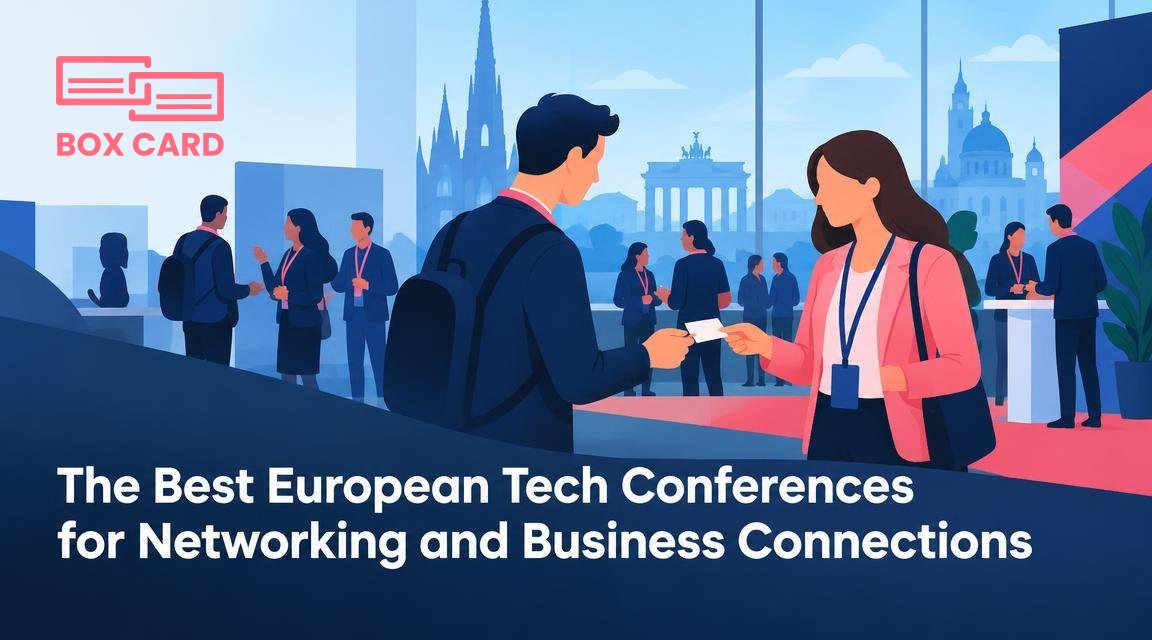
Choosing which European tech conference to attend is easy when you want inspiration, but harder when your goal is specific: meet the right people and turn brief encounters into business relationships. This article helps you decide which conferences are best for networking and business connections, and shows how to capture and turn contact moments into measurable outcomes.
How to choose conferences for real networking value
Not every tech event delivers the same return on time. Before you pick a conference, make three decisions.
- Primary goal: are you hiring, selling, fundraising, recruiting partners, or finding customers? The answer determines which conferences are most useful.
- Target profile: what titles, industries, or company sizes matter? A startup founder has different people to meet than an enterprise sales leader.
- Follow-up capacity: how many new contacts can you realistically manage after the event? If you cannot process hundreds of cards, choose smaller, niche events or bring systems to handle volume.
With those decisions in mind, here are seven European conferences that consistently reward attendees who prioritize networking.
Top conferences to meet people who matter
Web Summit, Lisbon
Who it suits: founders, VCs, scaleups, and enterprise scouts. Why it works: Web Summit gathers a very broad mix of attendees, including investors, media, and international founders, so you can meet many different kinds of contacts in a short time. How to use it: schedule meetings via the event app before you arrive, target one or two investor types, and spend mornings at curated roundtables rather than random booths.
VivaTech, Paris
Who it suits: European corporates, deeptech founders, and partners looking to pilot technology. Why it works: large corporate presence means rapid partner discovery and procurement conversations. How to use it: prepare concise pilot proposals, bring product collateral, and aim for follow-up meetings with procurement teams within two weeks.
Slush, Helsinki
Who it suits: early stage founders and investor-hunters. Why it works: Slush emphasizes matchmaking and has a friendly networking culture. How to use it: use the mentor and investor lists to ask for specific feedback, then use that feedback as a reason to follow up.
The Next Web Conference, Amsterdam
Who it suits: product teams, marketing, and developers from scaleups. Why it works: smaller than Web Summit and more focused on product-market discussions, which makes deeper conversations possible. How to use it: attend workshops and panels, then message speakers with a single-sentence takeaway and a meeting request.
Mobile World Congress, Barcelona
Who it suits: mobile, telecom, hardware, and IoT companies. Why it works: dense with industry buyers and integrators. How to use it: bring technical one-pagers, and schedule demos in advance if you want to talk to product or procurement teams.
SaaStock, Dublin
Who it suits: SaaS founders, customer success teams, and growth leaders. Why it works: deep focus on recurring-revenue business models, strong investor and operator attendance. How to use it: prioritize evening networking dinners and peer roundtables over the main stage if your goal is tactical partnerships.
Bits and Pretzels, Munich
Who it suits: founders ready to scale and non-technical co-founders. Why it works: community feel and founder-focused programming encourage candid conversations. How to use it: start conversations about growth challenges, then exchange contacts with a clear reason to reconnect.
Before the event: plan to meet people who can help your goals
Networking success is mostly preparation. Do these five things before you travel.
- Identify 15 to 25 high-priority people to meet, and find their profiles on the event app or LinkedIn.
- Request short meetings in advance. A 15-minute slot is better than trying to corner someone at a coffee break.
- Create two versions of your introduction: a 20-second version for hallway encounters, and a two-minute value pitch tailored to your target audience.
- Prepare digital assets to share quickly: a one-page deck, a link to a demo, and a contact card you can send immediately after a conversation.
- Decide how you will capture contact details at the conference. A physical stack of business cards still works, but pair it with a digital plan so no lead is lost.
Capture and convert: what to do with business cards
Capturing contacts is the lowest-value step; turning them into meetings is where the value appears. A simple workflow prevents lost leads.
- Scan or record contact details immediately. Use a business card scanning app at the booth or right after a conversation. If you prefer paper, collect cards in a single envelope and scan them at the end of each day.
- Tag contacts by event, priority, and opportunity type. Tags let you filter to urgent follow-ups after the show.
- Push important leads to your CRM. CRM integration is essential if you want sales or recruiting teams to act quickly.
- Send a personalized follow-up within 48 hours. Reference a specific detail from the conversation and propose the next step: demo, call, or introduction.
- Schedule follow-ups in your calendar and assign ownership. If you wait, momentum disappears.
If the conference produces a large stack of cards, consider a business card digitization routine. Using a high-quality business card scanning app will speed up processing and reduce errors. Tools that offer business card OCR app features help convert printed text into searchable contact fields. For teams, Cloud business card management and a business card management app make it possible to share contacts with colleagues and to maintain a single source of truth.
Boxcard can be part of this workflow: use Boxcard for quick scans on the show floor, and then sync important contacts to your CRM. If you are evaluating options, search for Boxcard scanning app reviews and compare them with other solutions. For an operations view, think of your system as a business card data management system: it needs to accept scans, deduplicate, tag, and feed CRM business card management routines so sales and partnerships teams do not have to copy data manually.
Two follow-up templates that work
Short, specific messages get replies. Copy and adapt these.
- Follow-up after a demo: Thanks for your time at [conference]. I enjoyed our chat about [specific topic]. Are you available next week for a 30-minute demo where I can show how [solution] handles [their need]?
- Connector request: I appreciated your advice about [topic] at [conference]. Could you introduce me to [name or role] at your company? I will keep the ask brief and specific.
Common networking mistakes and how to avoid them
- Collecting cards without context: always write a one-line reminder on the back or tag the digital record. Context is how you personalize follow-up.
- Waiting more than one week to follow up: the memory fades quickly. Aim for 48 hours.
- Not tracking outreach ownership: assign contacts to a person on the team and set deadlines.
- Using a manual spreadsheet to manage hundreds of cards: this slows you and creates errors. Move scans into a central contact system or Cloud business card management tool that supports CRM integration.
When to pick a big show and when to pick a niche event
Choose a big show when you need reach: brand exposure, many investor meetings, or international hiring. Choose a niche event when you need depth: sector expertise, high-quality buyer meetings, or less noise. If you expect to collect dozens of leads, prepare a business card management app or business card information sharing app to distribute contacts to teammates quickly.
For companies that need sales-ready contacts, build a simple scoring rule: meeting at the event plus a clear pain point equals high priority. Push those contacts into CRM business card management workflows immediately so the sales team can act while the meeting is fresh.
Next steps to get the most from your next European conference
Pick one event that matches your immediate goal, make a list of 15 to 25 high-value people to meet, and create a capture and follow-up plan that includes a business card scanning app and CRM integration. If you do not yet have a digital routine, try a short trial of a Boxcard business card management solution and compare it to other business card digitization app options. The practical measure of success is not the number of cards you collect, but the number of meaningful follow-ups you schedule within the first two weeks.
