Top Tech Events in the USA for AI, Software, Cloud and Emerging Technologies
Not every tech conference produces the same outcomes. This article lists the US events that matter for AI, cloud and software teams, explains who benefits most from each, and gives a practical, step by step workflow for capturing and managing contacts using tools such as Boxcard.
You want to choose the best tech conferences to attend this year, but there are dozens of overlapping events that each emphasize AI, cloud, software, or startups. This article highlights the top US gatherings to consider, explains who benefits most from each, and gives practical advice for capturing and managing new contacts efficiently using tools such as Boxcard and other contact workflows.
How I picked these events
I focused on gatherings that consistently deliver: deep technical tracks, vendor and partner ecosystems, and strong networking opportunities. The goal is not to list every meetup, but to point you to events that reliably advance product strategy, hiring, sales, or technical skills for teams working in AI, cloud, software engineering, and emerging tech.
Top US events to consider
CES, Las Vegas
Who should go: product managers, hardware and consumer AI companies, investors looking for new categories. What to expect: a large exhibition floor showing new devices, demonstrations of edge AI use cases, and a mix of press and retail buyers. For companies selling developer tools or cloud services, CES is useful to spot hardware trends that drive future software requirements.
NVIDIA GTC
Who should go: AI researchers, ML engineers, infrastructure architects, and executives evaluating GPU-based cloud infrastructure. What to expect: technical sessions on model training and inference, vendor announcements, and partner showcases for accelerated computing. If your work involves model performance or deploying GPU workloads, GTC is where the latest tooling and partner integrations are shown.
AWS re:Invent
Who should go: cloud architects, SREs, DevOps teams, and product owners building on AWS. What to expect: deep workshops, launch announcements for cloud services, and hands-on labs. re:Invent is valuable when you need direct guidance on production architecture patterns and want to network with AWS partners who provide integrations and managed services.
Google Cloud Next
Who should go: teams using Google Cloud Platform, data scientists, Kubernetes users, and companies focused on data and analytics. What to expect: product updates, case studies on data pipelines and ML, and sessions on cloud-native tooling. The event is also a practical place to evaluate managed analytics and ML offerings against your existing stack.
Microsoft Ignite
Who should go: enterprise architects, security teams, and developers in the Microsoft ecosystem. What to expect: sessions on Azure, developer tools, identity and security. Ignite often addresses enterprise governance and hybrid-cloud scenarios, so attend if you need guidance on long term cloud adoption and integration with Microsoft services.
KubeCon + CloudNativeCon North America
Who should go: engineers and architects working with containers, Kubernetes, and cloud-native platforms. What to expect: deep technical talks, project maintainers, and community-driven sessions. If you are deciding on service meshes, observability stacks, or CI workflows, KubeCon offers direct conversations with contributors and vendors.
TechCrunch Disrupt
Who should go: startup founders, early-stage investors, product marketers, and corporate scouts. What to expect: startup showcases, founder panels, and pitch competitions. Disrupt is best for evaluating new startup teams, early product ideas, and finding potential acquisition targets or integration partners.
RSA Conference
Who should go: security leaders, product security engineers, and compliance teams. What to expect: vendor exhibits on security tooling, threat intelligence briefings, and policy discussions. Use RSA to compare security vendors and to meet partners who can help you harden cloud and AI deployments.
Dreamforce
Who should go: sales leaders, CRM administrators, and teams using or evaluating Salesforce and its ecosystem. What to expect: product demos, partner booths, and training on customer data management. Dreamforce is particularly useful when your focus is CRM business card management and aligning lead capture with sales workflows.
How to choose the right event for your goals
- Decide the primary objective: hiring, product research, vendor shortlisting, sales lead generation, or technical upskilling. Choose the event whose agenda matches that objective.
- Match session depth to your team: conferences with many workshops favor engineering and implementation, while large expo shows favor marketing and business development.
- Consider who attends: vendor-heavy events are good for product integration, academic-heavy events are better for research partnerships, and startup events are best for deal flow.
- Budget travel and time: one deep event often yields more ROI than several scattered ones. Pick the one where you can spend focused time with partners or prospects.
Networking and contact management at scale
At large events you will collect a lot of contacts, both digital and physical. An efficient contact workflow turns these interactions into meetings, demos, and deals. For many teams the most practical approach combines immediate capture during the event with a short follow-up process afterward.
Why digitize immediately
Leaving cards in a pocket or on a table loses context. Digitizing on-site captures the interaction while it is fresh: who you spoke with, where you met, and what you agreed to follow up on. That context raises the chances of a meaningful follow-up.
How to digitize business cards, step by step
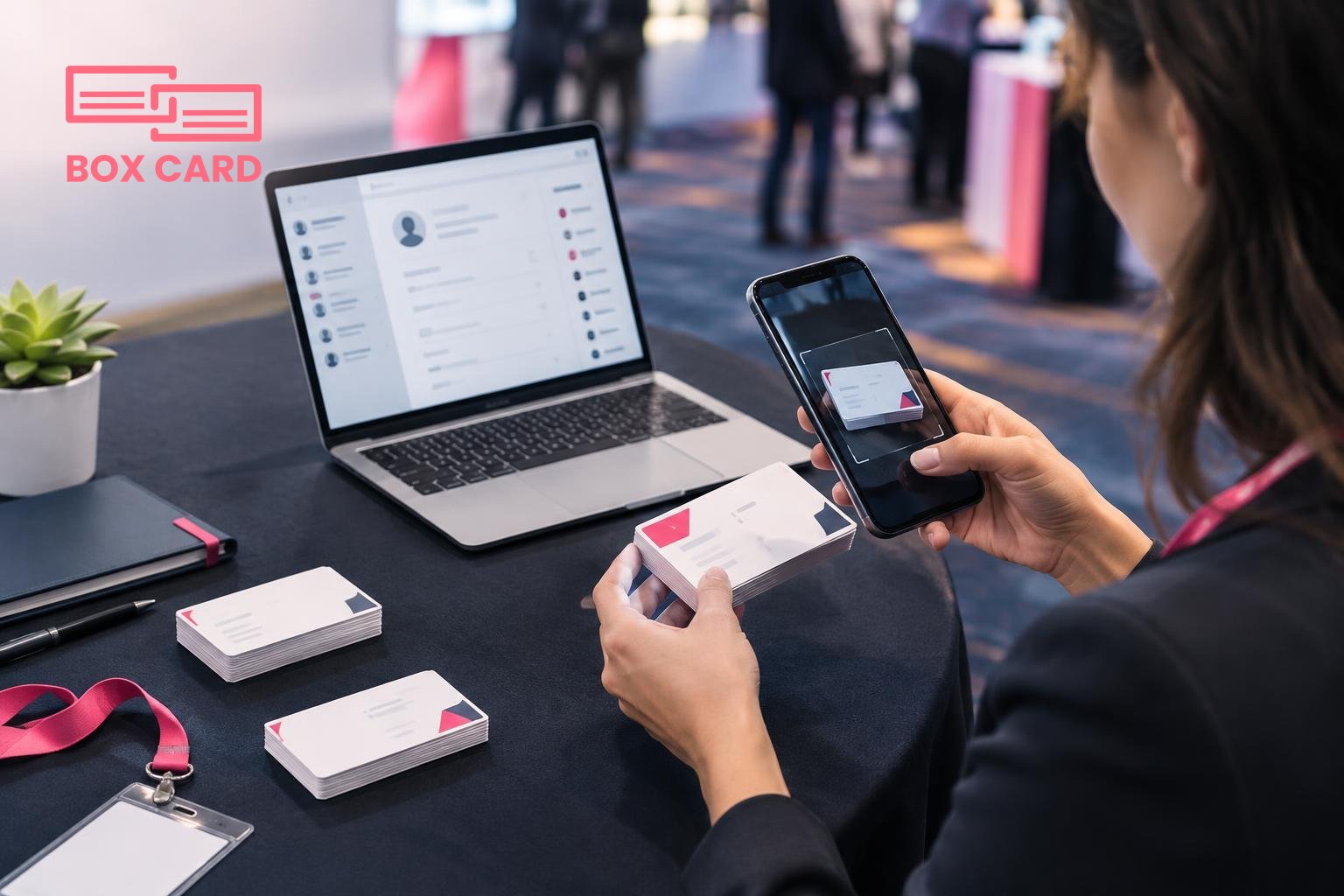
- Scan business cards immediately after meeting. Use a business card scanning app that supports quick capture and tagging.
- Add one-line context in the notes: where you met, what you discussed, and the proposed next step.
- Tag contacts by priority and type, for example: lead, partner, investor, or hire.
- Export or sync high-priority contacts to your CRM using CRM integration so your sales team can act quickly.
- Share relevant contacts with teammates using a business card information sharing app or the app's cloud sync so others can follow up.
Tools that perform business card digitization well reduce manual transcription. A business card OCR app speeds capture, while Cloud business card management keeps the data available across devices. If you need a quick solution at events, try a high-quality business card scanning app on your phone and set aside 15 minutes each evening to tag and distribute the contacts you collected.
If you already use Boxcard, the Boxcard scanning app can be the on-ramp for the rest of this workflow. Boxcard business card management helps you store scanned contacts, and BoxCard cloud makes data available to teammates. Look for apps that provide clear export formats for CRM business card management so your sales process stays consistent.
When evaluating options, search also for an AI business card scanner if you want features such as automatic field correction or duplicate detection, but verify accuracy on your own sample cards. For teams with a tight budget, Free business card management tiers can be a good starting point, then upgrade to paid plans when you need CRM integration or team-wide sharing.
Capture contacts at the event, add context before the memory fades, and push the best leads into your CRM within 48 hours.
How to follow up after an event
- Within 48 hours: send a personalized email referencing the conversation, attach relevant collateral, and propose a next step.
- Within one week: update the contact record with any new information from the response and move the lead into the appropriate pipeline stage.
- For partnerships or hiring leads: schedule a structured follow-up meeting and share internal notes with stakeholders to align next steps.
Consistent follow-up separates casual exchanges from productive relationships. If your team will process dozens or hundreds of contacts after a major event, standardize the tags, the CRM fields, and the follow-up templates before you go. That preparation reduces friction and ensures a predictable handoff from events to execution.
Pick one event that aligns with your highest-priority objective. Book a few targeted meetings in advance, plan how you will capture contact details on-site, and choose a simple digitization flow, for example using the Boxcard scanning app or another trusted business card management app that supports CRM integration. That plan will make your presence at the conference deliver measurable outcomes.
