The Biggest Technology Conferences in Europe for AI, Software and Innovation
Not all tech events deliver the same value. This guide matches European conferences to specific goals, shows how to choose the right shows for AI, software and innovation, and gives a practical workflow to digitize and follow up on the cards you collect.
Which European tech conference should you attend this year, and how do you turn a few days of talks and handshakes into real business outcomes? This article helps you pick the right events for AI, software and innovation, and shows the practical steps to prepare, network, and convert contacts into opportunities. It also explains a simple workflow to capture and manage the cards you collect so leads do not disappear after the show.
How to pick the right conference for your goal
Start by answering one question: what outcome matters most in the next 90 days? Typical goals map to different events.
- Fundraising and press: choose large, buzzy shows where investors and media attend.
- Partnerships and enterprise sales: attend industry-focused conferences with vendor tracks and corporate buyers.
- Hiring and branding: pick founder-friendly and regional meetups with strong local attendance.
- Technical learning and recruitment: look for AI and academic tracks or developer summits.
Also weigh cost, travel time, the conference schedule, and whether your target companies regularly send teams. You can attend fewer events with an intentional plan and better follow-up, which is where business card handling matters most.
Major European conferences to consider
Below are prominent events grouped by the kind of outcome they tend to produce. Use them as starting points, not a complete list.
Broad, high-profile: reach and press
- Web Summit, Lisbon: massive, covers startups to big tech. Good for press coverage, investor meetings, and meeting a broad mix of founders and buyers.
- VivaTech, Paris: European hub for startups and corporate innovation teams. Strong corporate participation if you want pilots or partnerships.
Telecom, hardware and mobile software
- Mobile World Congress, Barcelona: best for mobile-focused products, carriers, and device makers. If your software touches telco, MWC is a concentration of decision makers.
Founder and investor focused
- Slush, Helsinki: early-stage founders and international investors. The program is founder-centric and the networking format is intense and structured.
- SaaStock, Dublin: SaaS companies, product-led growth and scale-up networking. Useful for commercial SaaS teams and executive hires.
- Bits & Pretzels, Munich: founder festival with a mix of founders, investors and corporate partners.
Tech community and scale-up ecosystem
- The Next Web (TNW), Amsterdam: European tech community, early adopters and vendors. Good for product launches and meeting marketing or developer communities.
- London Tech Week: policy, enterprise buyers, and London-based investors. Strong fintech and regulated-industry presence.
AI specific and applied AI
- AI Summit, London: practical AI use cases, enterprise AI teams, and vendors. Expect panels and case studies from production deployments.
- AI & Big Data Expo Europe, Amsterdam: vendor showcases and sessions on scale, governance and applied models.
- CogX, London: mix of research, industry and policy conversations around AI and future technologies.
Compare events by what you need
If you prefer a quick comparison, use this simple table to match event types with typical attendees and the kind of preparation that pays off.
| Event type | Typical attendees | Best preparation |
|---|---|---|
| Large general tech shows | Investors, press, startups, corporates | Press kit, investor one-pager, 20 targeted meeting requests |
| Industry vertical conferences | Enterprise buyers, solutions engineers, product teams | Technical case studies, pilot offers, enterprise value props |
| Founder festivals | Early-stage founders, angels, VCs | Clear traction metrics, fundraising ask or hiring goals |
| AI and data summits | Data scientists, ML engineers, AI product leads | Technical demos, reproducible results, open source links |
How to prepare for networking and meetings
Good preparation reduces wasted time at the event and speeds follow-up afterward.
- Set three measurable goals for the conference, for example: two pilot meetings, five qualified sales leads, or three press introductions.
- Reach out to priority attendees before the show and suggest specific meeting slots. Use the conference app where available.
- Prepare a 30-second pitch and a one-page leave-behind. For technical audiences, bring short demos or reproducible notebooks accessible from a phone or laptop.
- Decide what you will collect from people: business cards, LinkedIn, or a quick contact form. Prepare a small routine to ensure you capture a contact method each time.
What to do with business cards after the show
Collecting cards is easy, converting them into closed deals is where most teams fail. Create a nightly routine:
- Sort cards into three piles: follow-up within 48 hours, informational (connect on LinkedIn), and long-term nurture.
- Digitize and tag contacts every evening. A business card scanning app speeds this step and prevents backlog.
- Immediately send a personalized follow-up message that references your conversation and proposes the next step.
When evaluating tools, look for these capabilities: accurate OCR, quick batch capture, simple tagging or grouping, export options for CRM business card management, and a Cloud business card management setup so your team can access contacts after the event. Search for terms like business card digitization, business card OCR app, or high-accuracy business card scanning app when you compare options.
Using Boxcard and similar apps at a conference
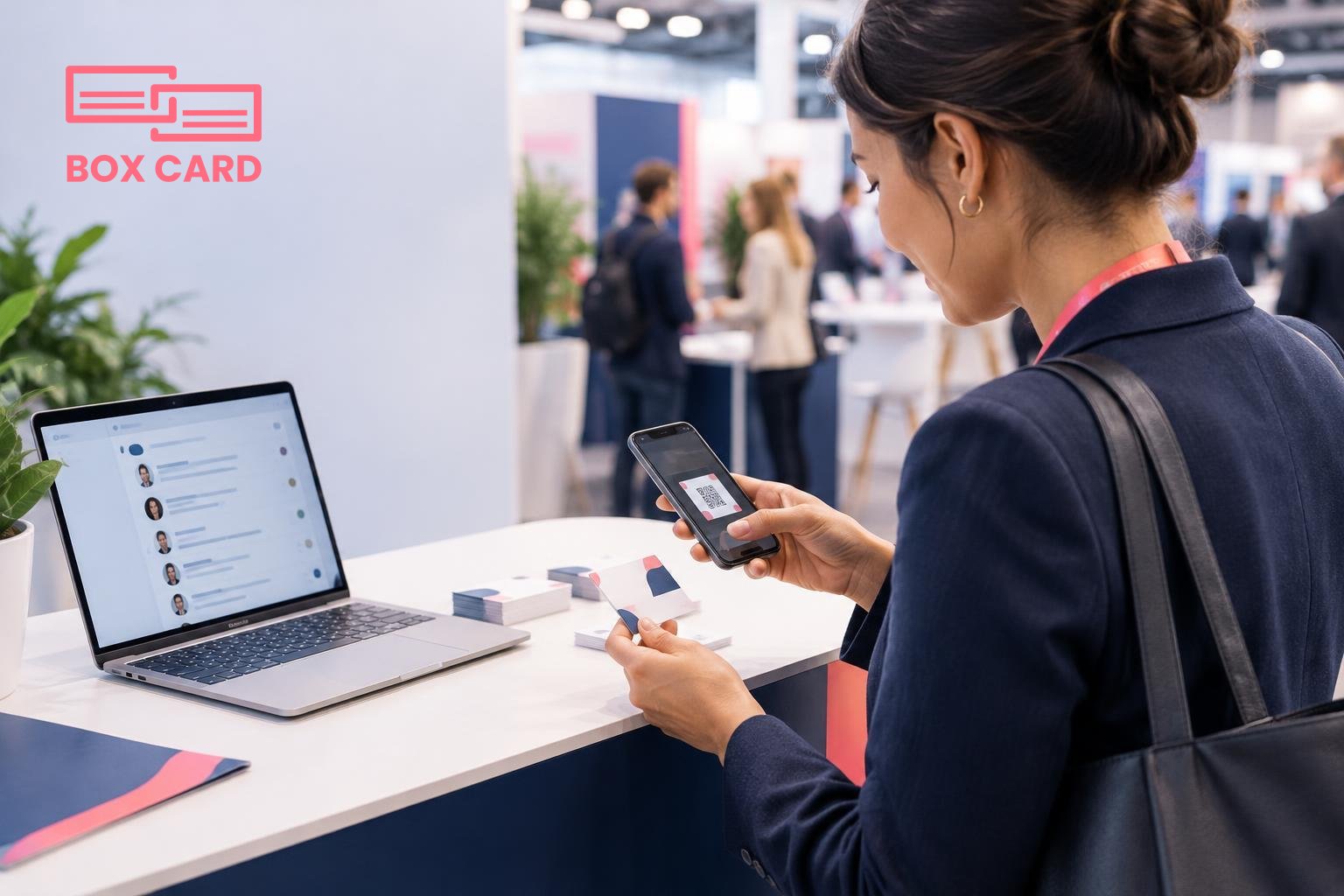
If you want a simple end-to-end workflow, use a dedicated business card management app. Capture cards with a business card scanning app as soon as possible, confirm the data, add tags for the conference and lead type, and share contacts with teammates. For many teams this is faster than manual entry and reduces errors.
If you are evaluating tools, try a few features in a quiet moment at the event: how fast is the initial capture, how easy is it to correct mistakes, and how quickly can you export contacts for CRM integration or export to your sales workflow. Search features that match your needs: business card management app, business card information sharing app, or business card digitization app. For team-oriented workflows consider Cloud business card management and a business card data management system so multiple users can access and update records.
Boxcard is one option to digitize and organize cards after a show because it offers straightforward scanning and contact organization. Try the Boxcard scanning app to capture cards on the floor, then use the app to sort and tag leads for follow-up. If you plan to store contacts in the cloud, check whether your solution supports BoxCard cloud or other cloud export paths that fit your team's processes. If you need a free trial before a conference, search for Free business card management options and compare the speed and accuracy of results for noisy environments.
Follow-up routine that actually converts leads
Successful follow-up is routine and fast. Use this checklist the day after the event:
- Digitize and tag all collected cards using your chosen tool.
- Send a personalized email within 48 hours that references your conversation and asks for one clear next step.
- Log the contact in your sales system or CRM so the record supports Sales support business card management and future reporting.
- Schedule reminders for second touchpoints and assign action owners if a pilot or technical demo is required.
Conferences create momentum only when you convert that initial contact into a scheduled follow-up and a small tracked outcome. Choose one event that matches your primary goal, test a short capture and follow-up workflow with a handful of contacts, and iterate the process before attending larger shows.
