AI-powered business card digitization improves accuracy through diverse training data, enhancing work efficiency and information management.

1. The Real Problem: Why AI Still Misreads Business Cards

Most AI business card systems rely on two core components:
- ・OCR to extract text from images
- ・NLP to classify extracted text into fields such as name, company, email, and phone number
Although the technology is mature, common errors still occur. Phone numbers may be classified as postal codes, emails may be assigned to the wrong fields, and complex layouts can break the structure entirely.
These issues often lead users to believe the AI itself is unreliable. However, the underlying cause is usually not the model, but the data used to train it.
When training datasets are too small, not representative of real-world variations, or incorrectly labeled, the system will inevitably produce inaccurate results regardless of how advanced the model is.
2. How AI Business Card Scanning Actually Works
A typical AI pipeline for business card scanning includes several steps. The system captures an image, extracts raw text using OCR, and then maps that text into structured fields through machine learning models.
Modern OCR systems are already quite strong at recognizing characters. The main challenge lies in interpreting the structure of the data correctly. Converting raw text into meaningful fields is where most accuracy problems occur, and this step depends heavily on training data quality.
3. Training Data: The Key to Accuracy

Business cards vary significantly in layout, language, and formatting. This is especially true in markets like Japan, where titles, departments, and hierarchical structures are often presented differently from Western formats.
To achieve high accuracy, training datasets must reflect these variations. Without sufficient diversity, the model cannot generalize well when encountering new designs.
4. What Actually Improves Accuracy
Improving accuracy is less about tweaking algorithms and more about building better datasets. Several factors consistently make a measurable difference.
Data diversity
Training data should include a wide range of layouts, industries, and languages. This includes simple and complex designs, multiple columns, different font styles, and multilingual content.
When the dataset closely reflects real-world scenarios, the model is better prepared to handle new inputs without failure.
Labeling quality
Each business card must be labeled with high precision. Fields such as name, company, title, email, phone number, and address need to be correctly assigned.
Even small labeling errors can significantly reduce performance because the model learns directly from these annotations. In practice, labeling accuracy should be above 95 percent to ensure reliable results.
Edge cases and imperfect data
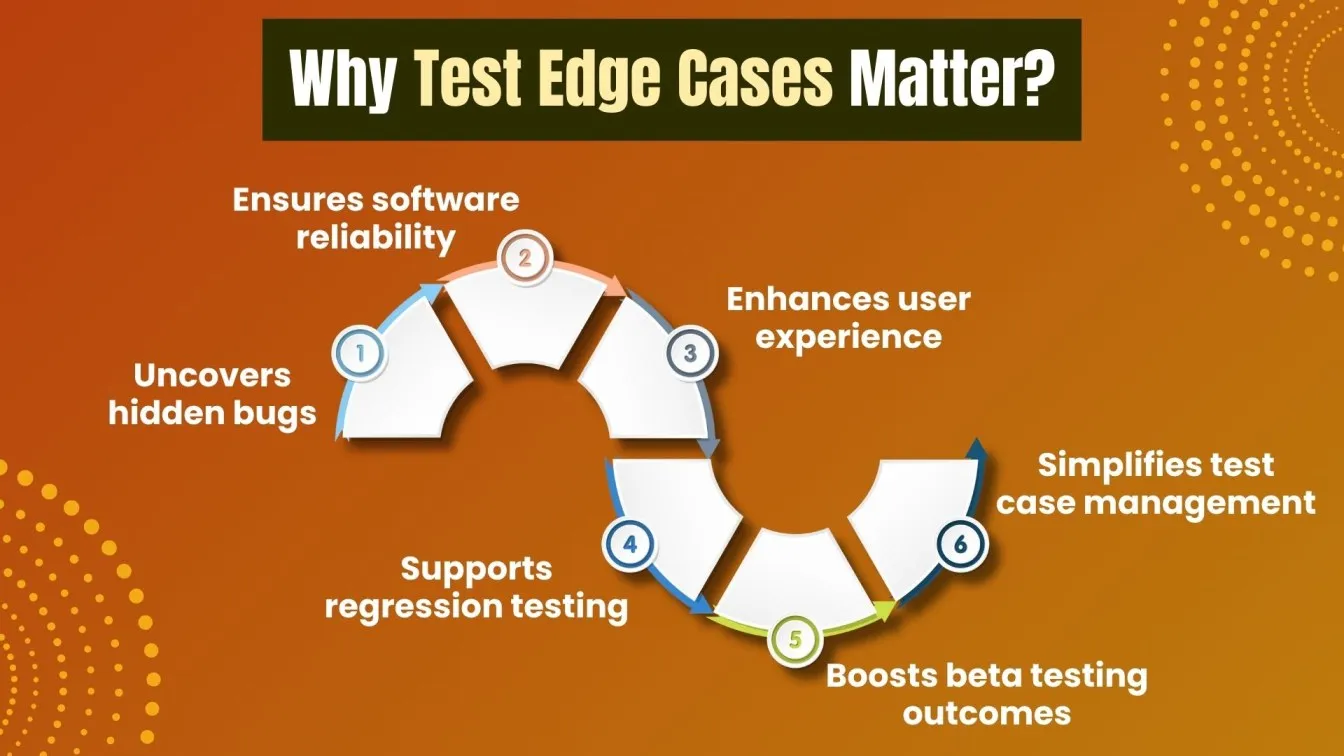
Real-world data is rarely clean. Cards may be blurred, tilted, poorly lit, or partially damaged. Some contain QR codes, icons, or unconventional layouts.
Including these cases in the training dataset improves the model’s robustness and ensures it performs well outside ideal conditions.
Regular data updates
Business card designs evolve over time. Without regular updates, model performance can degrade as it encounters newer formats that were not included in earlier training data.
Maintaining accuracy requires continuously adding new samples and retraining the system.
Synthetic data
When real data is limited, synthetic data can be used to expand the dataset. This may include generated layouts, fonts, and simulated cards.
However, synthetic data should be used carefully. Overreliance can introduce unrealistic patterns and reduce performance in real-world scenarios.
Proper dataset structure and evaluation
A well-designed dataset should be split into training, validation, and test sets. This ensures that performance is measured objectively rather than based on memorized patterns.
Evaluation metrics such as precision, recall, and F1-score should be applied to each field to understand where errors occur and how to improve them.
5. Learning From User Feedback

One of the most effective ways to improve accuracy over time is to incorporate user feedback into the system.
When users correct errors, such as fixing an incorrect email or name, the system can store both the incorrect prediction and the corrected value. These corrections can then be added to the training dataset.
This approach, often referred to as human-in-the-loop, allows the model to learn from real usage rather than static datasets.
In addition, systems that support continuous or incremental learning can retrain periodically using newly collected data. This leads to steady improvements in performance.
In real deployments, error rates can decrease from around 10 to 15 percent initially to as low as 2 to 5 percent after sufficient feedback and retraining.
6. Practical Impact of Higher Accuracy
Improving accuracy has a direct effect on both operational efficiency and user experience.
For organizations, it reduces the need for manual data correction, speeds up lead processing, and ensures reliable integration with CRM and marketing systems.
For end users, it builds trust in the system and reduces the need to verify every field manually. This shifts the tool from being a convenience to becoming a dependable part of daily workflows.
7. From Approximate Results to Reliable Systems
When training data is properly designed and continuously improved, AI systems move beyond approximate extraction and become reliable tools for business operations.
This transition is critical because it determines whether the system remains a supporting tool or becomes a core component of data infrastructure.
8. Boxcard – AI Business Card Management in Practice

“Business card apps sound useful, but they’re often complicated, slow, or eventually require payment.”
If you’ve ever felt this way, BoxCard is a great option to consider.
Boxcard is designed with three key strengths in mind: simplicity, lightweight performance, and free access, making it easy for anyone to get started right away.
・Easy to use: Intuitive interface with no complicated setup
・Lightweight and fast: Smooth performance without lag
・Free to use: Core features available without hidden costs
・Multilingual support: Supports English, Japanese, Vietnamese, Korean, and Chinese (Simplified & Traditional)
What Makes BoxCard Different?
Many business card management apps offer advanced features but come with trade-offs such as high costs, complex interfaces, or heavy performance.
BoxCard takes a different approach by focusing on essential functionality with a seamless user experience:
・Streamlined workflow with minimal setup
・Fast scanning, organizing, and searching
・Core features fully accessible without requiring payment
As a result, BoxCard stands out by offering a balance between usability, performance, and cost-efficiency.
This makes it especially useful for professionals handling multilingual business cards or working in international environments.
Who Should Use BoxCard?
・Beginners looking for a simple solution
・Users who want a free and efficient tool
・Professionals managing multilingual contacts
・Anyone who prefers lightweight and easy-to-use apps
👉 Download BoxCard now on the App Store or Google Play and start managing your business cards more efficiently.
The primary value lies not just in scanning, but in transforming unstructured contact information into structured, usable data.
Improving the accuracy of AI-based business card management depends primarily on data quality rather than model complexity.
