From Business Cards to Future Customers: AI-Driven CRM Integration for Modern B2B Sales
Business cards remain common in B2B sales, but their data is often underused. AI-powered scanning and CRM integration turn paper contacts into usable customer data.
1. Why Business Cards Still Matter in B2B Sales
Despite the growth of digital communication platforms, business cards remain a standard method of exchanging contact information in professional environments. Each card represents a specific interaction and potential business opportunity. In B2B sales, where long sales cycles and relationship-building are common, capturing this information accurately and promptly is critical. When business card data is not digitized and integrated into CRM systems, follow-up activities become fragmented and dependent on individual processes. AI-based digitization ensures that business card data is preserved, standardized, and immediately available for sales teams.
2. The Role of Business Cards in Customer Data Management
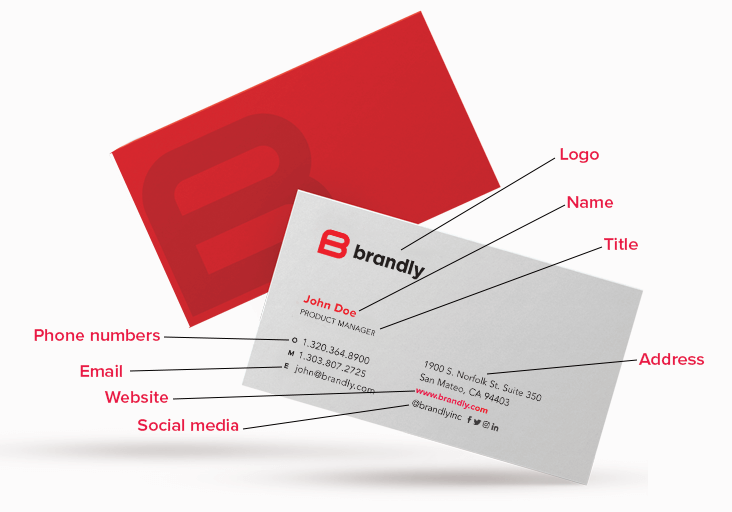
From a customer data management perspective, business cards represent an early-stage data source in the sales funnel. They often contain key identifiers such as company name, job title, and contact details that are essential for building customer profiles. When managed manually, this data can create inconsistencies across systems and teams. Integrating business card data into a centralized CRM allows organizations to maintain a single source of truth for customer information. This approach improves data quality and ensures that offline interactions are aligned with digital customer records.
3. How AI and CRM Integration Improves Sales Operations
AI and CRM technologies address different aspects of the same challenge. AI, particularly OCR and data recognition technologies, enables fast and accurate extraction of information from business cards. CRM systems provide the structure to store, organize, and analyze that data across the sales lifecycle. When integrated, AI automates data capture while CRM ensures long-term usability. This combination reduces manual data entry, minimizes errors, and supports more consistent sales processes. Over time, it also enables better reporting, forecasting, and customer segmentation.
4. The Business Card–to–CRM Integration Workflow

A typical AI business card to CRM integration process follows a clear sequence. First, business cards are scanned using AI-OCR technology, allowing text to be digitized quickly. Next, AI algorithms correct recognition errors, normalize data formats, and identify duplicate records. The processed data is then synchronized with CRM systems through API connections, ensuring that updates are reflected in real time. Finally, sales teams can access structured customer data immediately for follow-up, pipeline management, and reporting. This workflow transforms business cards from static paper items into active data inputs for sales operations.
5. Key Business Benefits of AI Business Card CRM Integration
Organizations that integrate AI-powered business card management with CRM systems typically experience several practical benefits:
・Improved data accuracy: AI reduces errors and duplication caused by manual entry
・Faster sales follow-up: Contact information becomes available in CRM systems without delay
・More personalized engagement: Unified customer profiles support targeted communication
・Operational efficiency: Sales teams spend less time on administrative tasks
・Better management visibility: Centralized data enables clearer insight into sales activity and trends
These benefits support scalable and repeatable sales processes rather than reliance on individual workflows.
6. Employee Adoption and Training as a Success Factor
Successful implementation depends not only on technology but also on employee adoption. Sales teams must understand how AI business card tools fit into their daily workflows. Training should focus on practical usage rather than technical complexity, starting with basic scanning and progressing to CRM-related use cases. Sharing real examples of how digitized business card data improves follow-up and reporting helps reinforce value. Internal support and feedback loops further ensure that the system is used consistently across teams.
7. Future Trends in AI-Driven Customer Data Management
Business card digitization is often the first step toward broader AI-driven customer data strategies. In the future, organizations may apply natural language processing, advanced analytics, and performance measurement to customer interaction data captured through CRM systems. This reflects a wider shift in B2B sales from experience-based decision-making to data-driven, repeatable strategies. Companies that establish clean, structured customer data early will be better positioned to adopt more advanced technologies as they mature.
8. Boxcard: An AI Business Card Management App
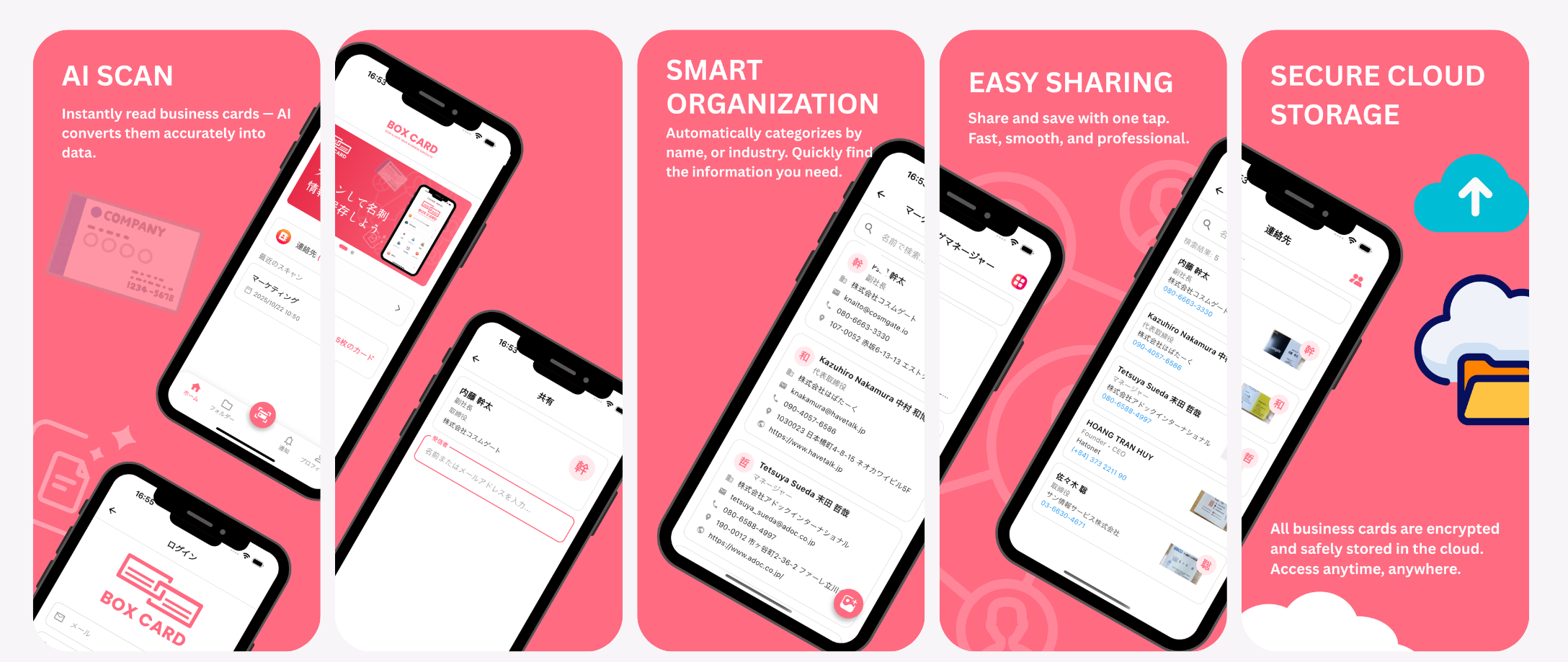
Boxcard is designed to support AI-driven business card management and CRM-ready data workflows. Key features include:
・AI-powered business card scanning with automatic data extraction
・Secure cloud storage that prevents data loss and ensures accessibility
・Structured digital contact records that are easy to search and manage
・Simple sharing capabilities for teams and external partners
・Bulk data download options to support integration and analysis
Boxcard is available for download on major platforms:
Using a tool like Boxcard enables organizations to begin digitizing business card data quickly while supporting more consistent customer data management.
Business cards remain a valuable entry point in B2B sales, but their full potential is realized only when the data they contain is actively used. AI-powered business card digitization combined with CRM integration allows organizations to transform offline interactions into reliable, structured customer data. For companies focused on improving data quality, operational efficiency, and scalable sales processes, adopting AI business card management represents a practical and forward-looking step in digital sales transformation.
